 Nidhi Gupta
May 30, 2026
1,357 views
14 min read
Nidhi Gupta
May 30, 2026
1,357 views
14 min read
One must learn about SAP MM interview questions if he or she wants to crack the technical interview and secure an excellent job in corporate SCM with a hefty pay package. SAP Materials Management (MM) is one of the most important functional modules in the SAP ERP system. The module takes care of everything, starting from purchasing raw materials to their management, storage in warehouses, and validation of invoices. The significance of this functional module can be gauged by the fact that the P2P process revolves around it.
To help you ace your technical interviews, we have compiled 40+ essential SAP MM interview questions and answers you should know. This list includes basic concepts for SAP MM freshers, as well as advanced integration aspects and configurations for experienced candidates, along with enhancements in SAP S/4HANA.
Overview of SAP MM and Why It Is Important
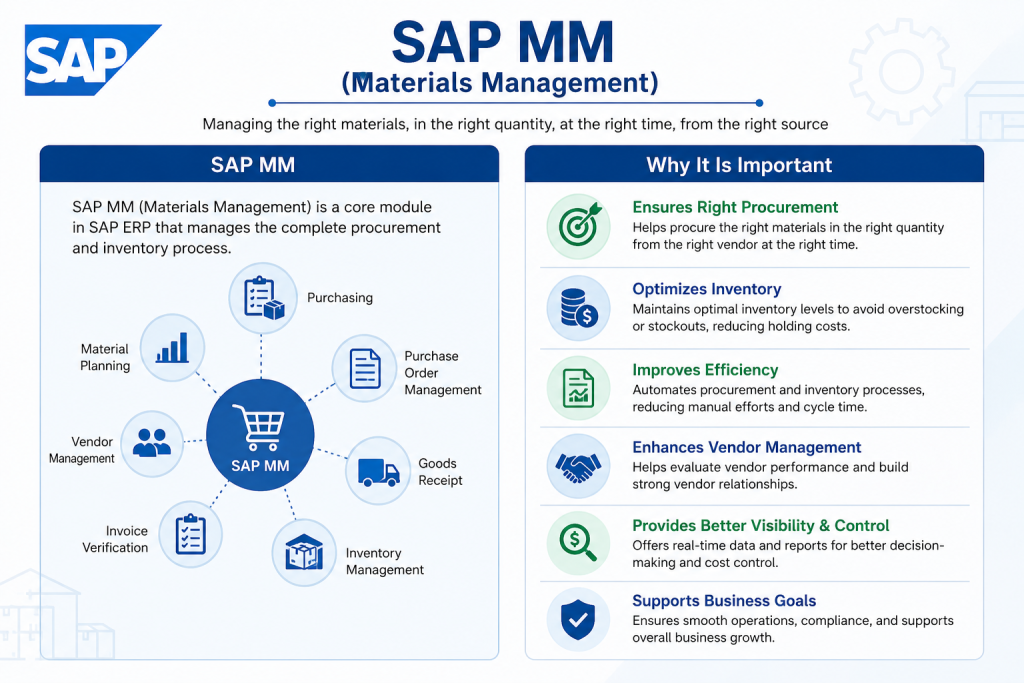
The SAP Materials Management Module is one of the primary modules of the SAP ERP system, which handles all procurement and material management processes within an organisation. This module covers all the stages in the supply chain management process, from procurement up to goods receipts, invoice verification, and inventory management.
SAP Materials Management module is very much related to other modules like SAP SD, SAP FI, SAP PP, and SAP WM.
Basic SAP MM Interview Questions and Answers
1. What is SAP MM?
SAP MM stands for Materials Management. This is a module of the SAP ERP system. This module handles procurement, stocks, and material accounting.
2. Mention the main sub-modules of SAP MM.
The major sub-modules of SAP MM are:
- Purchasing – Procures goods/services
- Inventory Management – Records stock transactions and quantities
- Invoice Verification – Compares invoices with purchase orders
- Material Valuation – Costing of material stored in the warehouse
- Warehouse Management – Keeps track of warehouses and bins
3. Explain a Purchase Requisition (PR).
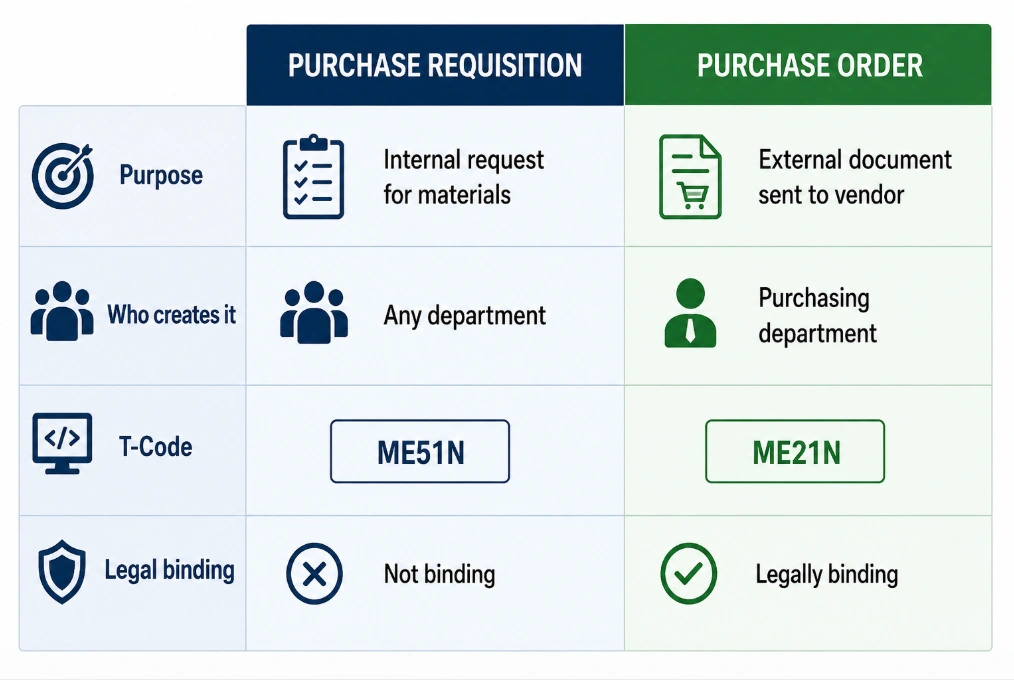
A Purchase Requisition refers to an internal document that is used in requesting the procurement of goods/services. The document is initiated in a particular department that requires goods and then approved for the generation of a Purchase Order (PO).
4. Explain a Purchase Order (PO) in SAP MM.
A purchase order refers to a documented request addressed to a vendor to supply goods/services at an agreed price/terms. A Purchase Order can be created through the ME21N transaction in SAP.
5. How Purchase Requisition different from a Purchase Order?
6. Discuss Material Master in SAP MM.
The Material Master is the database where all details related to a particular item, which can be bought, made, stocked, or sold within the organisation, are kept. The database consists of information that falls under the categories of basic data, purchasing, MRP, accounting, and storage views.
7. What is meant by Vendor Master in SAP MM?
Vendor Master is a collection of all details about a vendor or a supplier, including his/her contact information, terms of payment, bank details, and purchasing details.
8. What are some of the key transaction codes in SAP MM?
Some of the most widely used SAP MM transaction codes are:
- MM01 – Material Master Creation
- ME21N – Purchase Order Creation
- ME51N – Purchase Requisition Creation
- MIGO – Goods Movement
- MIRO – Invoice Checking
- MB51 – Material Document Listing
- ME2M – Purchase Orders by Materials
Intermediate SAP MM Interview Questions and Answers
9. Explain the Source List in SAP MM?
Source List refers to the source of supply for a material in a plant. It indicates which suppliers are authorised to purchase a material at a specific point in time. Source List can be made mandatory through the purchasing view of the Material Master.
10. What is a Quota Arrangement?
A Quota Arrangement lets you divide the procurement of materials between multiple suppliers in accordance with specified percentages. For instance, Procurement is divided in such a way that 60% comes from Supplier A and 40% from Supplier B.
11. Explain the Procure to Pay (P2P) process in SAP MM.
Procure to pay (P2P) process involves the following activities:
- Purchase Request (ME51N)
- Request for Quotation (RFQ) (ME41)
- Vendor Quotation (ME47)
- Purchase Order (ME21N)
- Goods Receipt (MIGO)
- Invoice Verification (MIRO)
- Payment (FI module)
12. Define Goods Receipt (GR) in SAP MM.
Goods receipt is the activity of recording the receipt of material physically at any plant or warehouse. In SAP, the activity of GR is done using transaction MIGO, which creates a material document and an accounting document.
13. Define Goods Issue (GI).
GI is the withdrawal of material from the warehouse either for manufacturing, distribution to customers, or other use. It results in a reduction of inventory level and causes an accounting entry.
14. Differentiate between a Blanket Purchase Order and a Standard Purchase Order.
A standard purchase order is issued for the procurement of material in one-off basis and in a certain quantity. Blanket Purchase Order is issued for repetitive procurements of material over a fixed period, not mentioning quantity each time.
15. Explain the concept of Scheduling Agreement in SAP MM.
A scheduling agreement is an extended outline agreement with a supplier. It contains quantity and delivery schedules. It is recommended for use if the purchasing requirements are determined for a fixed period in advance.
16. What is a Contract in SAP MM?
A contract is an agreement with the vendor about supplying materials/services during the period at agreed prices and terms. The types are:
- Quantity Contract – Fixed Quantity of materials/services
- Value Contract – Fixed Value of materials/services
17. What is Three-Way Matching in SAP MM?
Three-Way Matching involves matching the following three documents to verify payment:
- Purchase Order – Quantity and amount of order placed
- Goods Receipt – Quantity of goods received
- Vendor Invoice – Quantity and amount of order billed
If all three documents match within the tolerance, then the invoice gets approved for payment.
18. What is Invoice Verification in SAP MM?
Invoice Verification (transaction MIRO) involves posting/vendor invoices and validating it against the purchase order and goods receipt to match the quantity and amount.
19. Explain the importance of Movement Types in SAP MM.
The movement types determine the type of stock movement in SAP. Some of the movement types include:
- 101 – GR against PO
- 122 – RtvVend
- 201 – GI Cost Centre
- 261 – GI Production Order
- 311 – Transport between storloc
20. Define Special Stock in SAP MM.
Special Stock is a term used to refer to stock that is not part of normal stock. They include:
- Consignment Stock – stock owned by the vendor but located on the company site
- Subcontracting Stock – sent to a subcontractor
- Project Stock – associated with a specific project
- Sales Order Stock – associated with a particular sales order
Advanced SAP MM Interview Questions and Answers
21. What is the difference between Consignment and Subcontracting Procurement?
Feature | Consignment | Subcontracting |
Stock owner | Vendor | Company |
Material location | Company premises | Vendor premises |
Payment trigger | On consumption | On receipt of finished goods |
22. What is an MRP run?
MRP run determines the net material requirements based on demand and current stock availability. This process creates purchase recommendations such as purchase requisitions or planned orders.
23. What is a release strategy in SAP MM?
Release strategy is the workflow used to approve the purchase order requisition or the purchase order depending on certain criteria, such as value, plant, or material type. Each stage of this workflow is called a release code.
24. What is the Difference between Batch and Serialisation?
Batch Management – Batches similar materials together for batch identification (for instance, medicines having an expiry date).
Serialisation provides each unit with a unique serial number (for instance, electronic equipment).
25. What is the Valuation Class in SAP MM?
Valuation Class is used to link material to GL accounts in financial accounting. In other words, this class defines the accounts that will be updated through goods movements. For instance, raw material may be linked to a different valuation class from the finished good.
26. What is Moving Average Price (MAP)?
Moving average price is the dynamic valuation method whereby the material price will always be updated after each receipt of the goods. The valuation basis in the moving average price is the stock value and the value of goods receipts.
27. What is Standard Price in SAP MM?
Standard price is the static valuation method that sets a price for the material, which does not change after each receipt of the goods. Price variance is charged to price difference account. It is normally applied to finished and semi-finished products.
28. What is Split Valuation?
Split valuation is the valuation method that allows one material to be valued differently due to differences in the source, quality, or batch. The same raw material purchased locally may have a different price compared to imported material.
29. Why do we use the Info Record in SAP MM?
A Purchasing Info Record contains the connection between the vendor and the material as well as other information such as the vendor’s price, delivery time, etc. It is automatically suggested while creating the PO.
30. What is Automatic Account Determination in SAP MM?
Automatic Account Determination is the SAP process of determining the posting of the right G/L accounts while performing goods movements using transaction codes. This is accomplished through the configuration of transaction OBYC.
Scenario-Based Common SAP MM Interview Questions
31. What will you do when you have a price discrepancy in the PO and the invoice?
If there is any price discrepancy, SAP will clear that price discrepancy through the GR/IR account. If the price difference lies in the tolerated price variation range in MIRO, the invoice can be posted, but if it doesn’t, then the posting of the invoice gets blocked.
32. What will you do when Goods receipt cannot be posted against the PO?
Reasons for the goods receipt posting being unable and the solutions are:
- PO not released yet – complete Release Strategy
- Not delivered yet – check the delivery date
- Indicator not activated – check PO item record
- Vendor Blocked – check the Vendor record
33. How does SAP MM interface with SAP FI?
SAP MM and FI are interfaced using Automatic Account Assignment. When a Goods Receipt is done, there will be a Debit Posting of the Stock Account and Credit Posting of the GR/IR Account. In Invoice Verification, there will be a Debit Posting of the GR/IR account and a Credit Posting of the Vendor Account.
34. Compare Reservation and Purchase Requisition.
A reservation is an internal document prepared to allocate reserved stock that is available in the warehouse for a particular purpose (production orders, etc.). A purchase requisition refers to documents made to purchase items that are not yet available in the inventory.
35. What is the meaning of Return Purchase Order?
Return Purchase Order refers to the document used in sending material returns to the vendor.
Frequently Asked Common SAP MM Interview Questions
36. What is a Plant in SAP?
A Plant is an organisational unit in SAP that is basically a production site, warehouse, or branch. It is the basic unit of material management and production planning.
37. What is a Storage Location?
Storage Location is a subset of a Plant where physical goods are kept. Several storage locations can exist under a single plant.
38. What is a Purchasing Group?
Purchasing Group refers to the buyer or buyers who purchase on behalf of a purchasing organisation. This is usually used for purposes of reporting and authorisation.
39. What is a Purchasing Organisation?
Purchasing Organisation refers to an organisational unit that negotiates conditions with the suppliers. The purchasing organization may exist at either the company code level or the plant level.
40. What is the Difference Between Stock Transfer and Transfer Posting?
Stock Transfer: The actual transfer of materials from one plant to another or from one warehouse to another.
Transfer Posting: The change of status of the materials without any physical movement (such as from unrestricted use to quality inspection).
41. What is Cycle Counting in SAP MM?
Cycle counting in SAP MM is an inventory counting technique whereby the materials are physically counted periodically depending on their class (ABC), rather than counting all materials at once.
42. Define Delivery Tolerance in SAP MM.
Delivery tolerance is the maximum allowable delivery over or under-delivery on a purchase order item. If the quantity delivered is more than the delivery tolerance, SAP MM automatically stops the excess from being loaded into the system.
Comprehensive Summary Table: Essential SAP MM Transaction Codes (T-Codes)
Review this quick-reference table of core transaction codes frequently brought up in SAP MM Interview Questions and Answers.
Category | Transaction Code (T-Code) | Functional Purpose |
Master Data | MM01 / MM02 / MM03 | Create, Change, and Display Material Master |
Master Data | BP | Create/Maintain Business Partners (Vendors in S/4HANA) |
Master Data | ME11 / ME12 | Create and Change Purchasing Info Records |
Master Data | ME01 | Maintain Source Lists |
Procurement | ME51N / ME52N | Create and Edit Purchase Requisitions |
Procurement | ME21N / ME22N | Create and Edit Purchase Orders |
Inventory | MIGO | Post Goods Receipts, Goods Issues, and Transfers |
Inventory | MMBE | Check Real-Time Stock Overview for a Material |
Verification | MIRO | Post Incoming Vendor Invoices |
Verification | MRBR | Release Blocked Invoices |
Configuration | OBYC | Check the Real-Time Stock Overview for a Material |
How to Ace SAP MM Interviews?
- Have your T-code details ready — Most interview questions revolve around transaction codes. Get comfortable talking about their functions.
- Learn integration details — Learn about how MM integrates with FI, SD, and PP processes.
- Explain case studies — Explain case studies of projects in which you have solved any issues regarding purchasing or inventory management.
- Brush up on P2P process — It is the most common process flow test.
- Study configurations — Senior positions demand SPRO configuration, release and account determination concepts.
Prepare For SAP MM Interview Questions And Answers With Eduwatts

There is no doubt that Eduwatts is the top SAP Training Institute for taking SAP training courses. Eduwatts is an organization that fills the skill gap among people around the globe and helps you get relevant training. The teachers at Eduwatts have over 15 years of experience in industry and teaching. Eduwatts has trained more than 12,000 people from different countries such as India, Canada, France, and Africa.

Affiliations and Accreditations of Eduwatts
Key Features of the SAP MM Course
SAP Training Course at Eduwatts has the following features-
- Live online training
- LMS and e-learning portal access
- Assignments and assessments
- Internship opportunities
- Placement support
- Professional certifications
- Masterclass sessions
- Expert trainers with industry experience.

Syllabus Covered in SAP MM Course
The SAP MM Course helps learners understand:
- SAP MM organisational structure
- Procurement processes
- Inventory management
- Vendor management
- Material master data
- Supply chain management
- Logistics operations
- SAP MM integration with other SAP modules like FI, CO, SD, and PP modules
The training includes practical learning through projects, assignments, and real-world business scenarios
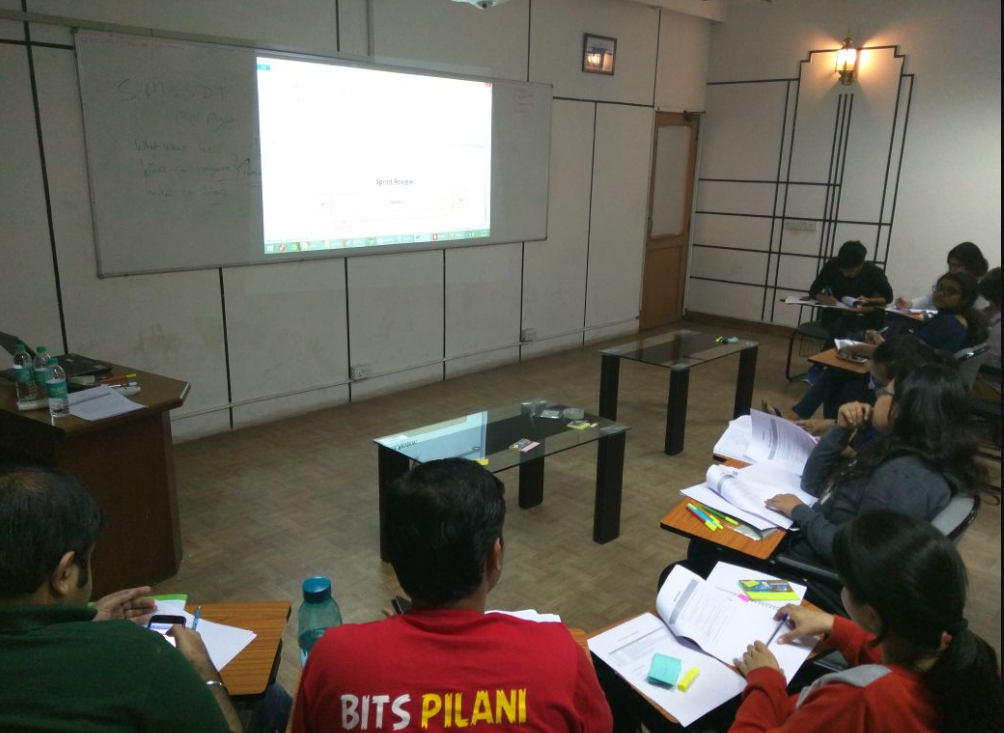
Course Benefits
- Understanding end-to-end procurement processes
- Learning inventory and warehouse management concepts
- Building SAP consultant skills
- Exposure to real-time projects
- Industry-recognized certification
- Placement assistance
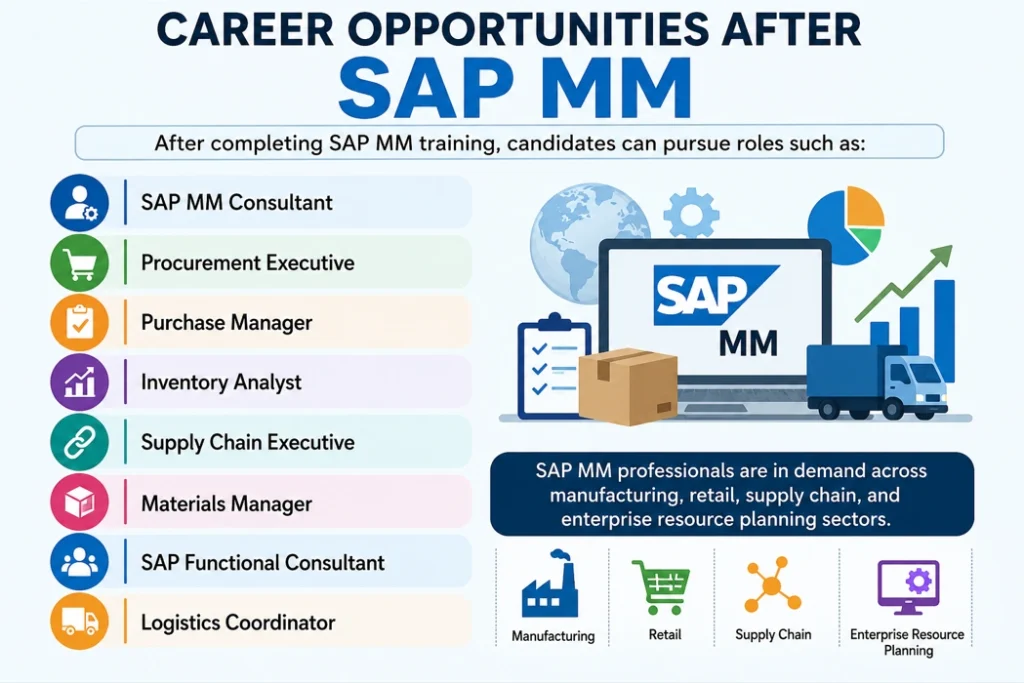
- Career opportunities in manufacturing, retail, logistics, and supply chain sectors
The course also helps learners understand purchase order management, invoice verification, material documents, and inventory valuation methods.
Certification and Support
The course includes:
- Course completion certification
- Exam preparation assistance
- Project guidance
- Placement support
- Recorded learning resources
Eduwatts Studnets Reviews
Career Opportunities
Conclusion
These SAP MM interview questions and answers will help you build yourself well enough to face any SAP MM interview, be it an entry-level interview or a senior consultant-level interview. This post includes all the important and common SAP MM Interview questions covering all the key areas ranging from basic concepts of Purchase Orders and Material Master to complex issues like Split Valuation and Automatic Account Determination.
Irrespective of whether you are preparing for your first-ever SAP job or looking out for a career as an SAP consultant, make sure to practice all the interview questions mentioned here regularly.
Recommended Reads
- Top 10 Institutes Offering SAP Courses In Pune
- 45+ Most Important SAP Interview Questions and Answers
- SAP Course: Details, Syllabus, Eligibility, Career, Scope, Fees and More
- SAP Consultant Salary in India
- Top 10 Institutes Offering SAP FICO Course in Bangalore
FAQs
The candidates who have graduated, procurement experts, supply chain experts, warehouse managers, and working professionals looking forward to learn ERP solutions can learn SAP MM. Even freshers can learn SAP MM.
Yes, SAP MM provides an excellent career opportunity as many organisations in the field of manufacturing, retail, logistics, health care, and automotive sectors are using the SAP solution for managing their procurement and inventory activities.
No specific requirement exists. However, basic knowledge of procurement, inventory, supply chain, and business processes can be beneficial in learning SAP MM efficiently.
The time required to complete the SAP MM training program varies from 2 to 6 months.
Yes, SAP MM certification can enhance the chances of employment for freshers as it will provide proof of knowledge related to the procurement and inventory process.
Ready to Start Your Learning Journey?
Join thousands of learners and build your future with expert-led courses and 100% practical training.

Nidhi Gupta
I am an experienced content writer who knows how to create compelling, clear, and search engine optimized content for different digital channels. My specialization includes blogging, article, website content, and other types of content that will be useful for you in terms of improving your company’s online presence. All my work is based on extensive research, attention to details, and knowledge of various industries. Apart from content creation, I have knowledge about Medical Coding and SAP principles, and this allows me to create relevant and valuable content for the health care and enterprise technology industries. In addition, I know several foreign languages such as German, French, and Chinese, and this is beneficial in order to create global-oriented content. I like making complicated information more understandable.
View all articles
Recent Comments (18)
An essential article on how SAP MM aspirants can nail the interviews as a fresher.
This guide revitalized my approach to SAP MM preparation.
Great set of SAP MM interview questions and answers Keep sharing such helpful content
Data is genuine, to the point and very useful for career.
It contains practical info that you can certainly use in real interviews.
A very helpful book for SAP MM Students and Experts as well.
You are well organized and can follow along. Great work
This guide is a good reference for interview preparation before going into an SAP MM interview.
Extremely helpful resources for the people seeking to have a career in SAP MM.
so many SAP mm concepts, it might not be easy for a candidate to prepare and study for interviews.
Thank you for collating a list of some of the top and frequently asked SAP MM questions.
Best Resources to Prepare For SAP MM Interview
The explanations are at a very practical level and simplified, which makes learning easier.
I have found this content helpful, prior to attending my SAP MM Interview.
I got a lot of help from this SAP MM interview preparation guide.
These are the most common questions asked in both for freshers and experienced professionals.
This is one of the best websites for SAP MM job seekers. Thanks for sharing
Very informative article! The interview questions include easy-to-understand explanations.