Nidhi Gupta
Apr 14, 2026
3,660 views
12 min read
Nidhi Gupta
Apr 14, 2026
3,660 views
12 min read
The SAP Course is one of the most demanding professional training programs for those who want to make a successful career in enterprise resource planning (ERP). The SAP Course trains the learners to handle business operations, data processing, as well as all the organisational workflows through improved software solutions.
SAP software is one of the most extensively used software packages created by SAP SE for different industries, including finance, production, logistics, human resources, and retail. As more firms pursue their digital transformation efforts, there continues to be an ever-growing need for SAP experts throughout the world. SAP (Systems, Applications, and Products in Data Processing) manages the activities of 440,000 organisations globally. Consequently, SAP Certified experts will undoubtedly remain highly sought after by leading recruiters.
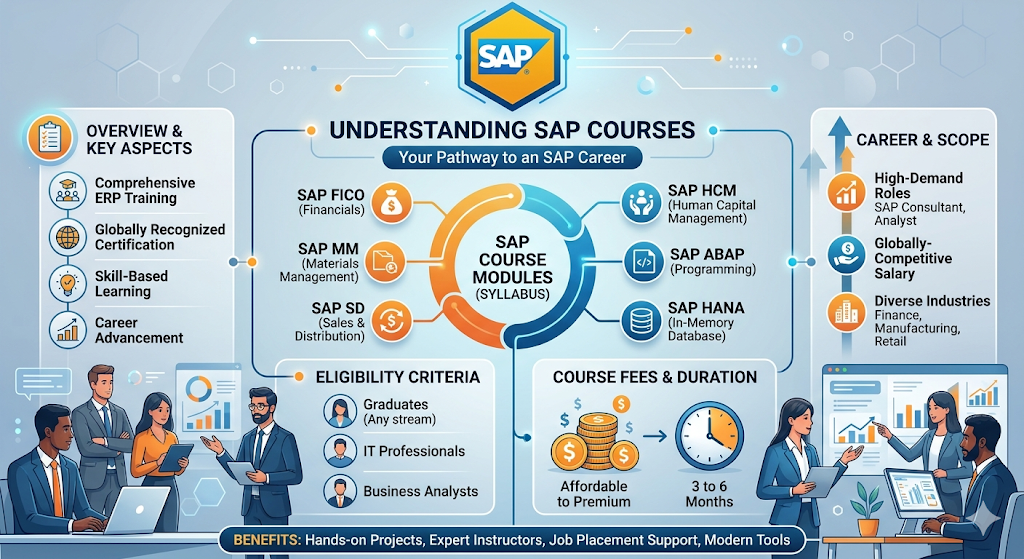
As a fresh graduate keen on your first job, as a working professional preparing to upskill, or a business analyst who wants to be one step ahead of others, the path to achieve these goals should ideally take you through enrollment in an SAP course.
In this complete guide, you will learn about SAP courses, eligibility, syllabus, fees and career opportunities available to a student.
What is an SAP Course?
SAP is an abbreviation for Systems, Applications, and Products in Data Processing. SAP also has special capabilities based on the specific type of business activity that links all aspects of a business process across multiple environments in a coherent manner. This SAP course trains you to configure, implement, and manage these types of software modules for companies in various sectors, including finance, supply chain, human resources (HR), and sales.
The SAP courses are available starting from the basic introduction to mastering SAP certification. They are provided by SAP itself (SAP Training and Adoption), authorised partners, private institutes, and online platforms. Undertaking an SAP course gives you hands-on, market-ready skills that are highly relevant to large businesses across every business sector.
At a Glance: SAP Course Details
| Parameter | Details |
| Duration | 3 – 12 Months |
| Mode | Online / Offline / Blended |
| Level | Beginner to Expert |
| Certification | SAP Certified (Official) |
| Offered By | SAP & Authorised Partners |
| Job Demand | Very High (Global) |
Advantages of Pursuing an SAP Course
- In-demand- Companies hire only SAP-certified professionals.
- Worldwide Career Options With SAP skills are recognised all over the world.
- Career Development- Professionals can attain much quicker management positions.
- Versatility- SAP is related to many industries.
- Rising Salary Potential- SAP specialists receive top-notch packages.
SAP Course Eligibility
Certainly, SAP courses are among the most lucrative options available, but what makes SAP many aspirants’ dream for it is that the eligibility criteria are not very stringent and thus attract a lot of aspiring candidates.
SAP Courses for UnderGraduate / Entry Level
- 10+2 (Higher Secondary) Passed
- Computer skills at a basic level
- Interested in business or IT processes
- All welcome, no previous SAP experience required
For Professional / Advanced SAP Certification
- Any Graduate Degree (B.Tech, B.Com, BBA, MBA Preferred)
- 1–2 years of active industry experience (only applicable for some modules)
- Domain expertise in Finance, HR, Supply Chain or Sales
- Knowledge of ERP systems is a plus
SAP courses are also aimed at professionals from non-technical backgrounds. SAP FICO for finance professionals, SAP HCM for HR managers and SAP MM or SAP SD for the personnel in logistics. The secret is that the module must be correctly aligned with your domain expertise.
Popular SAP Modules:
- SAP FICO (Finance & Controlling)
- SAP MM (Material Management)
- SAP SD (Sales & Distribution)
- SAP HCM (Human Capital Management)
- SAP ABAP (Programming)
- SAP BASIS (System Administration)
Each module focuses on a specific business function, making SAP training highly customizable.
SAP Course Syllabus
SAP Course syllabus details may vary depending on the module. Because SAP is not just software but a set of integrated modules, each focusing on a specific business function. SAP Modules: Overview of Popular SAP Modules and their syllabus.
1. SAP FICO (Finance & Controlling)
- Ledger Accounting
- Payable and Receivable
- Asset Accounting
- Cost Centre & Profit Centre Accounting
Financial Reporting & Closing
2. SAP MM (Materials Management)
- Procurement Process & POs
- Inventory Management
- Vendor Assessment & Invoice Confirmation
- warehouse management and material master data
3. SAP SD (Sales & Distribution)
- SOA & Pricing
- billing & shipping/transportation
- Customer Master and Credit Management Data
- Return and complaint handling
4. SAP HCM (Human Capital Management)
- PAYROLL MANAGEMENT & PERSONNEL ADMINISTRATION
- The management of time and talent
- Management of organizations
- Employee Self-Service (ESS) Portals
Additional popular SAP Modules are SAP PP (Production Planning), SAP QM (Quality Management), SAP BASIS (System Administration), SAP ABAP (Programming) and development tool, as well as business intelligence in the form of data warehousing SAP BW/BI along with SAP S/4HANA — which is the brand name for a next-generation enterprise resource planning suite developed by the German software company SAP SE that is built on in-memory computing.
SAP Course Fees
The SAP course fees range drastically for the SAP courses, depending on the course provider, learning mode, selected module and level of certification. Here is a general breakdown:
Course / Provider | Duration | Approximate Fees |
SAP Global Certification (Official) | 2–6 months | ₹50,000 – ₹1,50,000 |
SAP Authorised Training Centre | 3–6 months | ₹30,000 – ₹80,000 |
Private Institutes (Online/Offline) | 3–9 months | ₹20,000 – ₹60,000 |
Online Platforms with self Paced leanring (Udemy, Coursera) | Self-paced | ₹500 – ₹5,000 |
MBA with SAP Integration | 2 years | ₹2,00,000 – ₹10,00,000 |
Official SAP-certification exams (completed on Pearson VUE or SAP’s own site) incur a separate exam fee — usually between $500 and $800 per attempt for global certifications, depending on the choice of credentials. Many institutes in India offer training packages with almost a mock certification at lower fees.
| Tip for value: Many institutes provide EMI and placement guarantees. Make sure to check if the institute is an SAP Authorised Education Partner (AEP) before enrolling — it guarantees a quality curriculum and globally recognised credentials. |
Factors Affecting SAP Course Fees:
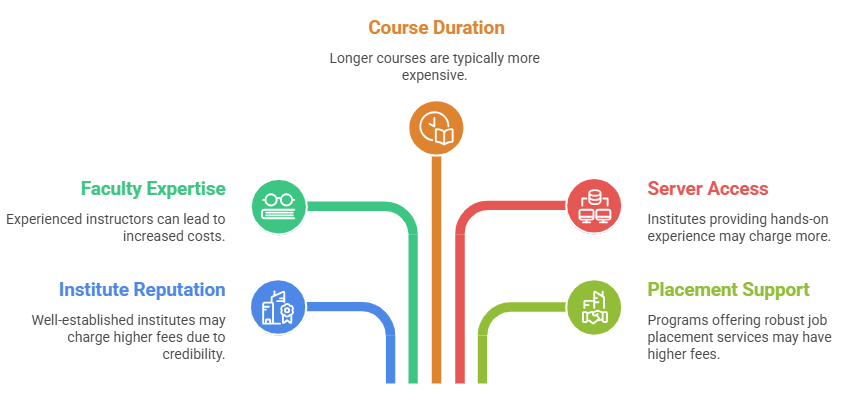
Some of the institutes also provide EMI options and discounts.
SAP Course Scope
The scope of the SAP course is huge, and it is expanding as well. With accelerating digital transformation across industries, organisations are increasingly moving to SAP S/4HANA and SAP cloud solutions. This leads to a continued high demand for certified SAP professionals worldwide.
Key Industries Hiring SAP Professionals
- Manufacturing & Automotive
- Banking, Financial Services & Insurance (BFSI)
- Retail & E-Commerce
- Biopharma & Pharmaceuticals
- Logistics, Supply Chain & Transportation
- IT Services & Consulting
- Oil & Gas and Energy
- Public Sector / Telecommunications
More so, India has a talent pool of SAP professionals worldwide. There are large SAP consulting practices of companies like Infosys, TCS, Wipro, Accenture, IBM, Deloitte and Capgemini, which proactively go in search of those who have been certified over the years. India actually has one of the largest numbers of SAP professionals in the world.
The global ERP software market is also expected to cross the $100 billion mark by 2027, with SAP controlling the lion’s share of that market. Thus, the long-term scope for an SAP course holds extremely bright prospects!
SAP Career Opportunities & Salary
A SAP course can lead to multiple high-end positions in IT, consulting and business sectors. These are some of the most sought-after job profiles, along with the approximate salaries in India:
Job Role | Avg. Annual Salary (India) |
SAP Functional Consultant | ₹5L – ₹18L |
SAP ABAP Developer | ₹4L – ₹15L |
SAP BASIS Administrator | ₹5L – ₹16L |
SAP Project Manager | ₹12L – ₹30L |
SAP S/4HANA Consultant | ₹8L – ₹25L |
SAP Business Analyst | ₹6L – ₹20L |
SAP Data Analyst | ₹5L – ₹14L |
SAP Security Consultant | ₹7L – ₹22L |
Experienced SAP professionals can earn much higher salaries (esp in MNCs + overseas [US, Europe, Australia]) if they have between 5–10 years of work experience and are well-versed with the latest technologies such as SAP S/4HANA or SAP Fiori. Internationally freelance SAP consultants charge $80–$150 per hour.
Types of SAP Courses Available
By Certification Level
- SAP Associate Certification — Beginner / entry-level
- SAP Professional Certification — Advanced practitioners
- SAP Specialist Certification — Expert/domain mastery
By Mode of Learning
- Classroom Training (Instructor-Led)
- Live Online Training (Virtual Instructor-Led)
- Self-Paced E-Learning
- Blended Learning (Online + Offline)
SAP offers a Learning Hub through a subscription that gives access to e-learning, virtual live classrooms, and also raw systems for you to practice in. It’s perfect for working professionals who ask for flexible, self-paced learning.
Online vs Offline SAP Course
Online SAP Course:
- Flexible schedule
- Learn from anywhere
- Cost-effective
Offline SAP Course:
- Classroom interaction
- Hands-on training
- Better networking
Certainly, you must choose the mode of learning based on your preference and work-life schedule. .
How to Choose the Right SAP Module?
SAP has more than 25 functional and technical modules to choose from, so selecting the most suitable SAP module is of immense importance. A few general guidelines considering your experience:
- Accounting / Finance background → SAP FICO
- HR / People management → SAP HCM or SAP SuccessFactors
- Supply chain / Procurement → SAP MM or SAP SCM
- Sales / Marketing → SAP SD or SAP CRM
- IT / Technical background → SAP ABAP or SAP BASIS
- SAP FICO and SAP MM continue to be the most widely required modules across industries and countries, making these good first choices for the majority of professionals.
How to Choose the Best Institute For the SAP Course?
Selecting an appropriate institute for the SAP Course can have a direct effect on your career. A good institute builds real competencies; a poor one wastes time and money. Quality over quantity, remember that.
So, here is a very simple, to-the-point guide you can follow when choosing the best SAP training institute.
- Check Institute Accreditation
- Evaluate Trainer Experience
- Check Course Curriculum (SAP Syllabus)
- Focus on Practical Training
- Placement Support Matters
- Look for Student Reviews and Alumni Feedback
- Batch Size vs. Learning Mode
- Check Infrastructure and Tools
- SAP Course Fees ( Not Price, Value ) Comparison
- Choose the Right SAP Module
- Ask for a Demo Class
- Look for Post-Course Support
Eduwatts – Best Institute for SAP Course

Indeed, Eduwatts is one of the best SAP training institutes in India. It provides industry-relevant SAP courses that equip learners with practical skills and high-paying job roles. Eduwatts, with a focus on hands-on training, expert mentoring and international recognition, has become the preferred choice for students and working professionals.
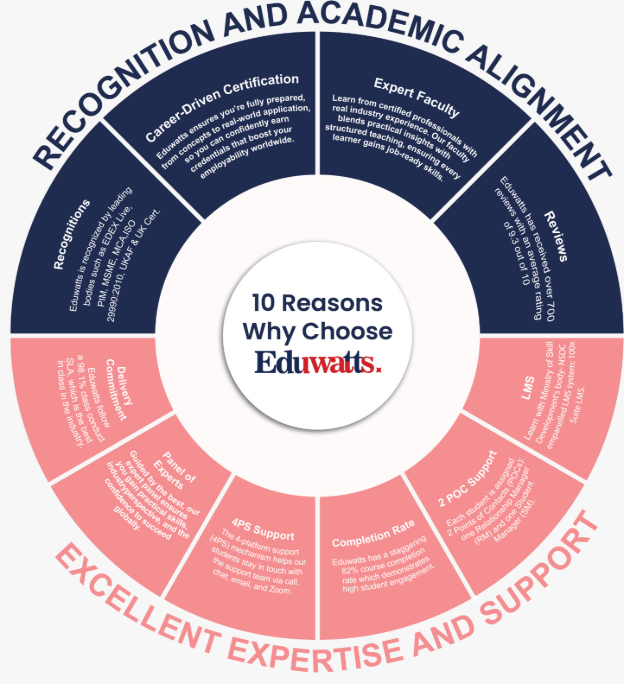
Why Choose Eduwatts?
1. Industry-Aligned SAP Training
Eduwatts provides online SAP training that is in line with the latest industry standards and business demands. The courses are designed to give you a deep understanding of ERP systems and real-time business applications.
- Includes new features, including SAP S/4HANA
- Focuses on real-world business scenarios
- Provides MM, SD, ABAP, etc. — Module-Based Specialisation(FICO)
- Eduwatts ensures learners learn job-relevant skills, as SAP is used across industries.
2. Expert Trainers with Industry Experience
Eduwatts enables students to gain real-world industry experience from some of the most experienced and certified SAP professionals in the market.
- Trainers with real project experience
- One-on-one interaction and doubt-solving sessions
- Guidance on real business challenges
It allows learners to connect theory with practice and navigate SAP with confidence in actual work settings.
3. Hands-On Training with Live Projects
SAP training institute, practical exposure is the key strength of Eduwatts.
- Live SAP server access
- Real-time projects and assignments
- Industry Scenario-based Case Studies
And, courses such as SAP BASIS and SAP FICO which is focused on providing implementation-based training in order to acquire practical skills.
4. Globally Recognised Certification
Eduwatts certifications boost professional credibility and unlock worldwide career opportunities.
- Industry-recognized SAP certification
- Exam assistance and preparation support
- Certification validates practical skills
It enhances employability so that candidates can secure jobs in the best organisations.
5. Flexible Learning Options
So, Eduwatts is perfect for students as well as working professionals.
- Online live instructor-led classes
- Weekend and fast-track batches
- Flexible work and study arrangements
- Learners can take classes from anywhere and manage their time efficiently.
6. Placement Assistance and Career Support
Our learners are driven by career outcomes, not just training,” she said.
- Resume building and interview preparation
- Placement assistance after course completion
- We have access to job opportunities across industries
The students can avail Designations such as SAP Consultant, Analyst, and being Certified.
Conclusion
An SAP course is not just a certification but an investment in a globally recognised, lucrative career. With criteria for its courses being quite broad when it comes to who is eligible for the SAP course syllabus, reasonable fees associated with this SAP course cost-wise, coupled with an extensive range of applications of such a degree across industries, there has never been a better time than now to get SAP-certified!
SAP provides reskilling. Whether you are starting from scratch or wanting to change your career, SAP has the path of learning that suits your background, budget and ambitions. SAP professionals are in huge demand across the world as SAP skills have become increasingly valuable.
Recommended Reads
- SAP Basis Consultant Salary in India
- Top SAP Modules for a High-Paying Career in 2027
- SAP Consultant: Roles, Types, Skills & Salary Guide
- SAP Consultant Salary in India
- Top 10 Institutes Offering SAP FICO Course in Bangalore
FAQs
Absolutely. SAP dominates a sizable portion of the ERP market, and demand for SAP professionals has never been so high, given that SAP S/4HANA migrations are being expedited across the globe. Besides, this certification plays an important role with a good return on investment in the ramp-rate of the job market, especially in terms of the time turnover required to have SAP experienced consultant.
Yes. Modules such as SAP FICO, HCM and SD are typically meant for business/domain experts. Modules like ABAP and BASIS find it more technical. Choose modules based on your professional background.
It depends on the electives you choose in your degree.SAP courses typically take about 3 to 6 months for one module. End-to-end training programs for multiple modules or SAP S/4HANA can go up to 12 months. It will be sooner than that for those who take online self-paced courses, since the pace depends on how hard you are willing to work.
Yes. SAP certifications have transitioned to a ‘stay current’ model — certified practitioners must complete quarterly update assessments to maintain their credentials aligned with the latest SAP release.
SAP Training gives you the theoretical and practical exposure to a particular module. An SAP certification refers to an official exam conducted by SAP that certifies you have expertise. It is the certified credential that brings great value to your resume.
Ready to Start Your Learning Journey?
Join thousands of learners and build your future with expert-led courses and 100% practical training.

Nidhi Gupta
I am an experienced content writer who knows how to create compelling, clear, and search engine optimized content for different digital channels. My specialization includes blogging, article, website content, and other types of content that will be useful for you in terms of improving your company’s online presence. All my work is based on extensive research, attention to details, and knowledge of various industries. Apart from content creation, I have knowledge about Medical Coding and SAP principles, and this allows me to create relevant and valuable content for the health care and enterprise technology industries. In addition, I know several foreign languages such as German, French, and Chinese, and this is beneficial in order to create global-oriented content. I like making complicated information more understandable.
View all articles