 Pallavi Saxena
Aug 18, 2026
2,733 views
14 min read
Pallavi Saxena
Aug 18, 2026
2,733 views
14 min read
More than just “Hello”, Korean Greetings are an essential aspect of the Korean language. These greetings are key elements of Korean communication styles, culture, etiquette and building healthy personal and professional relationships in Korean-speaking countries.
Knowing how to greet in Korean eases conversations. Koreans use varying speech levels depending on age, status, how well they know each other (intimacy) and social situations. With this, learning how to say ‘Hi’ is one of the very first steps Korean learners should learn and also one of the most practical anyway. If you understand when and how to use these Greetings, it will be easy for you to learn some basic greetings, ranging from the one that is universally useful, 안녕하세요 (Annyeonghaseyo), to casual expressions which are used amongst close friends.
In this blog, we will walk through an overview of different types of Korean Greetings along with their meanings and pronunciation. How are they used, and what is their significance in industries beyond language acquisition? Moreover, mastering basic greetings in Korean Langauge can help beginners gain a more communicative flavour, becoming more confident and equipped with Korean cultural awareness.
How to Greet in Korean?
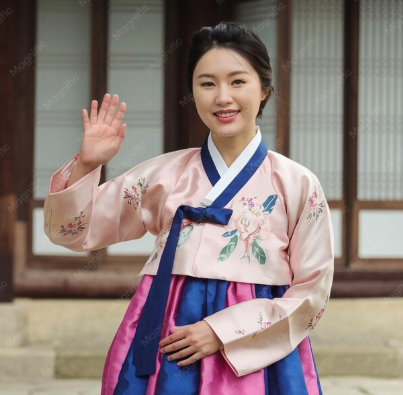
Learning how to say “ Hello ” in Korean first acknowledges that politeness is important. The other most practical greeting that you can use in your everyday life is 안녕하세요 (Annyeonghaseyo), Hello, Hi (Polite Form). You can use it with colleagues, teachers, acquaintances, elders or people you do not know much about.
When speaking formally, especially at the workplace or in super respectful situations, you need to use 안녕하십니까 (Annyeonghasimnikka). It is pronounced in a more formal way and is typically used for speeches, presentations, announcements, interviews and at any other official venue.
For close friends, 안녕 (Annyeong) can either mean 「Hi」 or 「Bye.」 But you should use this form of language only with peers until you are more familiar with Korean speech level usage. Body language also contributes to these greetings. A little bow, especially in formal proceedings, conveys respect. Choosing the correct pronunciation along with respectful body language gives a good impression, and it relates to Korean cultural awareness.
Korean Greetings: The Best Way for Beginners to Start
When you start learning a new language, it may feel difficult at first due to the fact that learners first face sounds, writing systems, grammar structures and vocabulary they are not used to. Hello is an easy place to start. They are short, often repeated and useful right away. More importantly, these Greetings show learners a key principle: context is everything. Basic Greetings in Koean Langauge first encourage students to consider the difference between casual and polite speech, as well as formal versus informal ways of speaking in Korean.
Mastering these Greetings has become an essential element for advancing to the next level of learning the Korean language. Small and simple, your first success in saying a Korean phrase. Learners can then progress on to introductions, questions, directions, shopping conversations, and workplace speaking before the discussions are flowing. If your ambition is to travel, study or work in Korean-speaking countries, start small but frequently. Even knowing basic greetings in Korean Language will boost your confidence for the next step.
Basic Korean Greetings
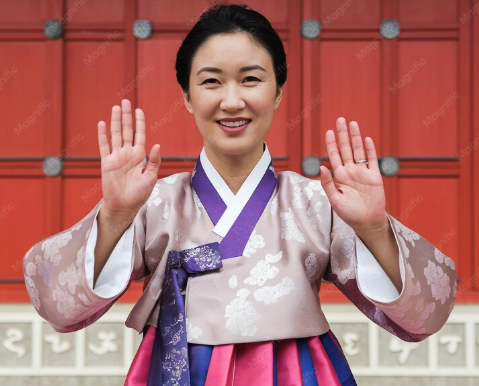
1. 안녕하세요 (Annyeonghaseyo) – Hello
This is the simplest and most significant Korean greeting for beginners. It is polite, friendly, and flexible. Use it with coworkers, acquaintances, teachers, elderly people, store employees and strangers.
2. 안녕 (Annyeong) – Hi/Bye
The term Annyeong is used casually from one person to another. Mostly, you will observe 안녕 (Annyeong) – Hi/Bye amongst friends, siblings, children and people with a standard informal relationship.
3. 안녕하십니까 (Annyeong Hashimnikka) – Hello
This is a highly formal greeting. This is an expression of a formal greeting. It can be seen in formal circumstances, business presentations, public statements, military contexts, interviews or events that require a higher level of respect.
4. 좋은 아침이에요 (Joeun achim ieyo) – Good Morning
Literally meaning “It is a good morning,” this phrase can be used to wish someone a good morning. In everyday Korean, 안녕하세요 remains the more standard all-purpose greeting.
It means “Good Morning,” and can be used to wish someone a good morning. In ordinary Korean, however, the more neutral all-in-one greeting is still 안녕하세요.
5. 만나서 반가워요 (Mannaseo bangawoyo) – Nice to Meet You
This phrase is something that comes in handy when you are meeting someone for the first time. This does a good job of showing that you are happy and excited to meet the other person and is also best used right after introducing yourself.
Common Korean Greetings
1. 잘 지냈어요? (Jal jinesseoyo?) – Have you been well?
This is a nice phrase to use when meeting someone again. It is like the question, “How was your day? This can obviously initiate a conversation after a period of time away.
2. 오랜만이에요 (Oraenmaniya) – Long Time No See
Use this expression when seeing someone after a long time. It is amicable and courteous, and it may be used with someone you have met before but not for a while or maybe somebody that you don’t know well.
3. 좋은 하루 보내세요 (Joeun haru bonaeseyo) – Have a Good Day
This is a useful expression when ending an interaction. It communicates goodwill and works well in everyday conversations, workplaces, customer interactions, and service situations.
4. 잘 지내세요 (Jal jinaeseyo) – Take Care / Stay Well
This phrase can mean “Take care” or “Stay well.” It is especially useful when saying goodbye or wishing someone continued well-being. It’s a helpful expression for when you are wrapping up an interaction or wishing someone continued well-being. It is an effective phrase in casual conversations, workplaces, client meetings, and service environments.
5. 또 만나요 (Tto mannayo) – See You Again
This courteous phrase translates to “Let us meet again”. This is a simple phrase for students who want to finish a conversation on an upbeat note but don’t want to use a too formal expression.
Formal Korean Greetings

Formal language is significant in professional, academic or official environments. Here are five expressions learners should know for formal conversation.
1. 안녕하십니까 (Annyeong Hashimnikka) – Hello
This expression is a more polite version of “Hi.” It also suits appropriate contexts like official introductions, formal meetings, speeches, interviews and any situation that must use respectful language.
2. 처음 뵙겠습니다 (Cheoeum boepgetseumnida) – It is a Pleasure to Meet You
It is a very respectful expression used to address someone you are meeting for the first time, especially someone older or in an official professional context.
3. 만나서 반갑습니다 (Mannaseo bangapseumnida) – Nice to Meet You
It is a formal version of “Nice to meet you.” Great for business introductions, networking events, academic meetings or any professional opportunity.
4. 잘 부탁드립니다 (Jal butak hamnida) – I Look Forward to Working With You
There is no perfect English equivalent to this key professional expression. It conveys benevolence, respect, and good intent to collaborate.
5. 안녕히 가세요 (Annyeonghi gaseyo) – Goodbye
Say this when the other person is leaving and you are left behind. This is a polite and common way to say goodbye and is important for both casual interactions as well as professional exchanges.
Informal Korean Greetings
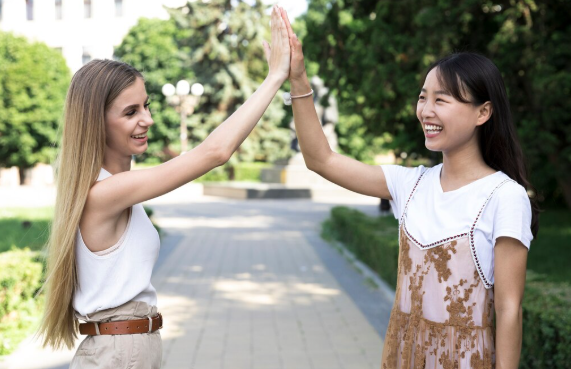
You can use informal greetings usually for someone close to you. While it is great to know, people who are learning Korean for the first time should be careful about using informal Korean when speaking to strangers.
1. 안녕 (Annyeong) – Hi/Bye
This is the most casual common greeting. It can be used to greet friends and peers (people of the same age) informally when meeting or parting.
2. 잘 지냈어? (Jal jinaess eo?) – Have You Been Well?
Hi there (Casual form of asking how you are doing). It’s for close friends, siblings and people you would normally speak casually.
3. 오랜만이야 (Oraenmaniya) – Long Time No See
This casual phrase is good to use when you meet a close peer (old friend) that you have not met in a long time (in years). This sounds more friendly and casual than 오랜만이에요.
4. 잘 가 (Jal ga) – Bye / Go Well
Use this casual expression when the other person is leaving. It is appropriate among close friends and family members but should not be used casually with senior colleagues or strangers.
5. 또 봐 (Tto bwa) – See You
This is a short and casual expression meaning, yeah I will see you. It is a word that is commonly used in friendly conversations and can be said when we are saying bye to someone you usually meet.
Basic Greetings for Different Situations
Greeting a Teacher
Hello is a polite, safe choice when talking to a teacher, instructor or senior person. However, there could be situations where 안녕하십니까 would be more appropriate in formal meetings.
Greeting a Friend
안녕 is natural with a close friend. You can also ask 잘 지냈어? if you have not met your friend for a long time.
Meeting Someone for the First Time
Use 처음 뵙겠습니다 in a formal situation or 만나서 반갑습니다 if you want to say “Nice to meet you” politely.
Starting a Business Meeting
A professional greeting such as 안녕하십니까 can create a respectful opening. After introductions, 잘 부탁드립니다 can communicate your positive intention to work together.
For example, a formal salutation like 안녕하십니까 creates an atmosphere for respect. Once you have done the introductions, saying 잘 부탁드립니다 communicates the intention to work together well.
Saying Goodbye
If you are staying or the other person is leaving use 안녕히 가세요. You use 안녕히 계세요 when you are the one who is leaving.
Eduwatts: No.1 Institute for Korean Language Certification Courses

Eduwatts is the No.1 education platform for mastering foreign languages like Korean. The institute is known for its high-standard Korean language Training Course. A professional training platform that guides learners on different levels of Korean Language from Level1 to Level 6. Eduwatts provides a professional Korean Language Training Platform. We have highly qualified and well experienced trainers that give extensive training with clear concepts and real time examples for better understanding of the topic. Moreover, you will avail the benefit of hands-on live project-based practical learning with expert mentoring.
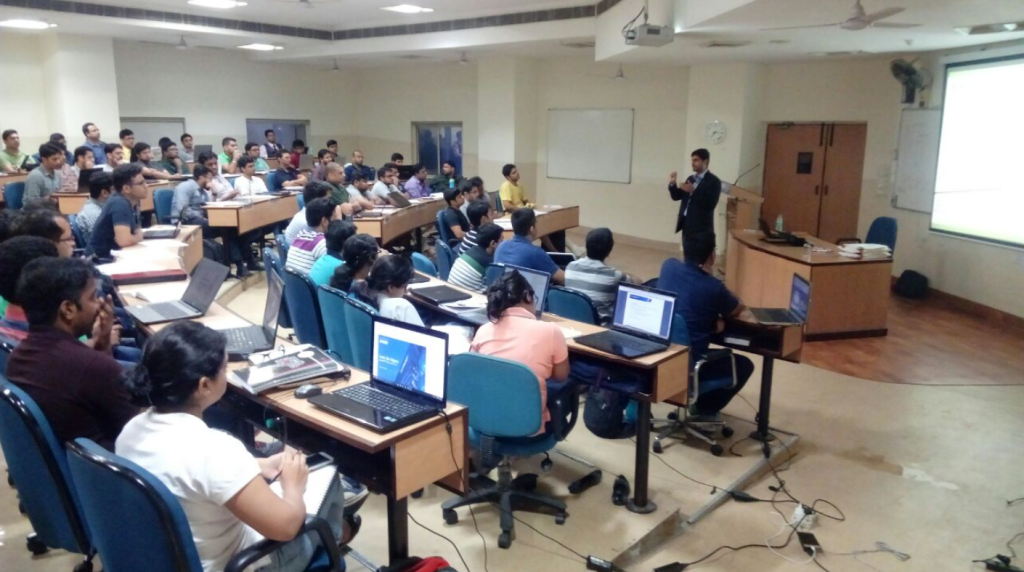
Eduwatts is an established Language Institute of the university, where you can find a School of Korean Language and various Korean Language Courses, from Level 1 to Level 6 along with options for both postgraduate/ master’s level education in Korean language. Learning common Korean Language greetings progressing to more diverse vocabulary, grammar, listening, speaking, reading, and writing provides a meaningful learning experience for language learners. Those learners who want to learn and master Korean Language to communicate fluently in Korean can select an Online Korean Language course based on the level that suits their independent self-learning goals.
Why Choose Eduwatts for Learning Korean Language?
| FEATURES | EDUWATTS – KOREAN LANGAUGE COURSES |
|---|---|
| Course Levels | Level 1 to Level 6 |
| Learning Mode | Live, instructor-led online learning |
| Trainer Support | Expert guidance and mentorship |
| Live Training | Live training sessions with practical learning |
| Beginner Learning | Korean alphabet, numbers, basic vocabulary, grammar and sentence structure |
| Intermediate Learning | Progressive Korean vocabulary, grammar, sentence formation and communication skills |
| Advanced Learning | Advanced-level Korean language learning and communication |
| Practical Learning | Focus on applying Korean language concepts in practical situations |
| Learning Resources | Course learning materials and supporting resources |
| Certification | Certification available upon successful course completion* |
| Course Duration | Level 1: 56+ hours; higher levels have progressively structured course durations |
| Course Fees | Level 1 currently lists ₹9,500 discounted from ₹12,500 |
| Placement Support | Eduwatts lists job support and placement-related services on its website |
| Project Support | Project support is listed among Eduwatts learner services |
| Career Focus | Designed to support learners developing Korean language skills for academic and professional purposes |
| Progressive Learning | Learners can progress systematically from Level 1 through Level 6 |
| Best For | Beginners, students, working professionals, Korean-language enthusiasts and learners seeking structured Korean language training |
Learning Benefits
1. Builds Everyday Communication
Common greetings in Korean are highly-used and beginner-friendly. You can engage in conversations, say hi to people, and do basic social interactions right off the bat.
2. Improves Cultural Understanding
Introductions teach Korean concepts of respect, age, building good and healthy social relations. This is a far more meaningful way to learn Korean than memorising translations.
3. Strengthens Pronunciation
This introduces learners get familiar with Korean sounds and rhythm. Greetings are one of the easiest ways to start speaking Korean out loud.
4. Speak in Korean with Confidence
The ability to successfully use a greeting in a real conversation can encourage learners to stick with their studies. Small wins in communication can slowly take out hesitance and fear of making mistakes.
5. Strong Foundation for Korean Language Expertise
After mastering Basic Greetings, students can seamlessly transition to introductions, questions, numbers, everyday vocab and phrases, grammar points and eventually conversations that span multiple sentences. This is why basic sentences in Korean language can provide the possibility for broader Korean Language skills.
Top Korean Language Courses
- Korean Language Course- Level 1
- Korean Language Course- Level 2
- Korean Language Course- Level 3
- Korean Language Course- Level 4
- Korean Language Course- Level 5
- Korean Language Course- Level 6
| Course Name | Korean Langauge Levels | Course Duration | Course Fees |
|---|---|---|---|
| Korean Language Course – Level 1 | Beginner | 56+ Hours | ₹9,500 (listed fee ₹12,500) |
| Korean Language Course – Level 2 | Beginner / Elementary | 56+ Hours | ₹9,500 (listed fee ₹12,500) |
| Korean Language Course – Level 3 | Intermediate | 66+ Hours | ₹12,500 (listed fee ₹15,500) |
| Korean Language Course – Level 4 | Intermediate | 66+ Hours | ₹12,500 (listed fee ₹15,500) |
| Korean Language Course – Level 5 | Advanced | 66+ Hours | ₹15,500 (listed fee ₹19,500) |
| Korean Language Course – Level 6 | Advanced / Highest Level | 66+ Hours | ₹15,500 (listed fee ₹19,500) |
Top Job Roles in Korean Language
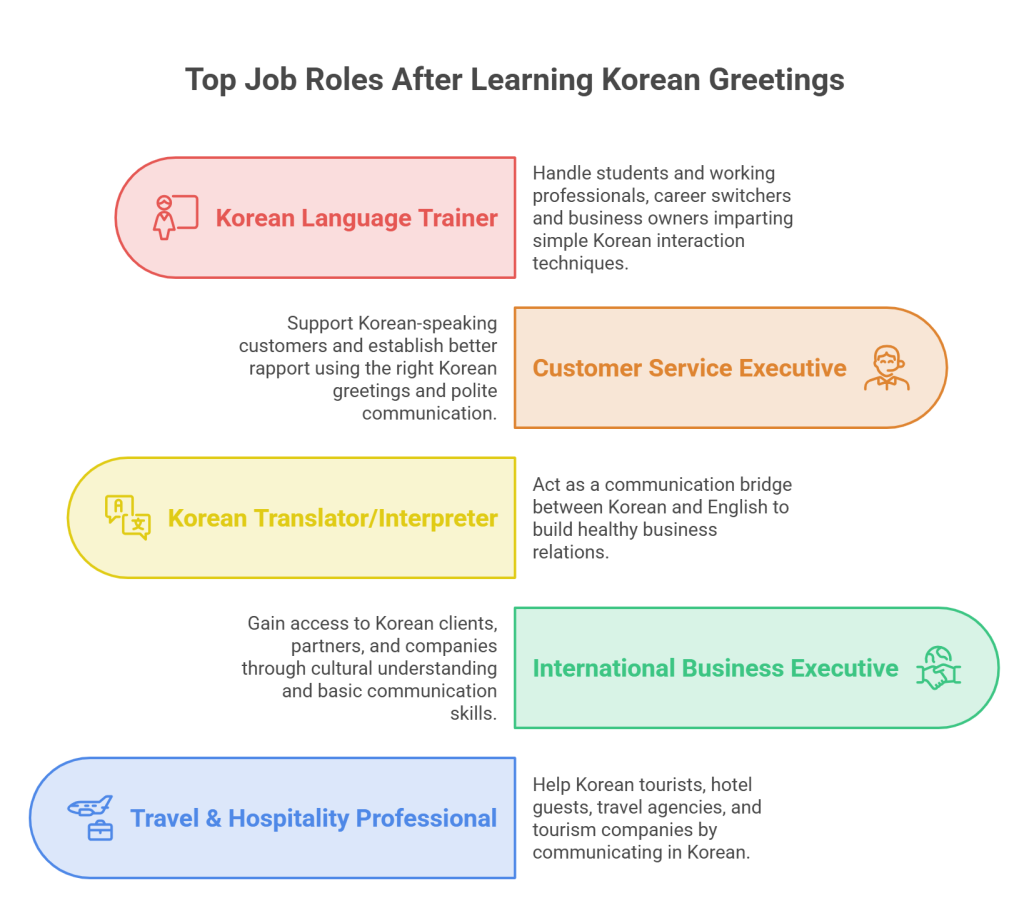
- Korean Language Trainer – Handle students and working professionals, career switchers and business owners imparting simple Korean interaction techniques such as greetings, vocabulary, pronunciation and everyday Korean Communication.
- Customer Service Executive – Effortlessly support Korean-speaking customers and establish better RAPPORT however only when addressed to them using the right greetings and polite communication in korean langauge.
- Korean Translator/Interpreter – work as a Korean Translator and become a communication bridge between Korean and English. You can help to communicate well and build healthy business relations by playing a vital role as a Korean Translator.
- International Business Executive – Gain access to Korean clients/partners/companies through understanding of the culture and some basic communication skills in Korean.
- Travel & Hospitality Professional — Help Korean tourists and hotel guests, travel agencies, and tourism companies by communicating with them in Korean Language.
Conclusion
Greetings in Korean Langauge are among the most polite and adorable expressions a beginner can learn. A polite Korean greeting is the way to say “hello”. It is the first step to learn the Korean Language and understand different levels of politeness in Korean Language. Moreover, it is the building block advancing Korean Language Learning. Mastering Basic Greetings in Korean Langauge is an essential key for understanding Korean culture, Etiquette and building healthy Professional and Social Relationships.
Expressions such as 안녕하세요, 안녕, 안녕하십니까, 만나서 반갑습니다, and 잘 부탁드립니다 can help Korean Language learners communicate well in everyday. Master greetings will boost your confidence to start speaking in Korean in any Korean environment like Social, Academic, and Professional. The key to master these Greetings is understanding context. A casual phrase may be perfect for a close friend but not for a senior or boss. Similarly, a formal Korean expression may be appropriate in a business meeting but sound odd among friends. Paying attention to different levels of Korean Greeting will help you to communicate confidently in every situation or Korean speaking environment.
Whether you are interested in Korean culture, Korean business, travel to Korean-speaking destinations, learning basic greetings is a first step toward meaningful communication in Korean Language. Start with common Korean langauge greeting today, practise it confidently, and continue building your Korean language skills!
FAQs
Ans. 안녕하세요 (Annyeonghaseyo) is the most common Korean greeting that depicts politeness. It means “Hello” and can be used with friends, colleagues, family members and elders.
Ans. 안녕 (Annyeong) is informal. It is generally used with good friends, cousins, kids, and people in a well-established informal relationship. Students should use 안녕하세요 when unsure about the appropriate level.
Ans. 안녕하십니까 (Annyeong Hashimnikka) is a formal way to say hello. This is appropriate for official events and presentations, interviews, announcements and professional situations that call for a high degree of respect.
Ans. For polite you can say 만나서 반가워요 (Mannaseo bangawoyo) or for formally 만나서 반갑습니다 (Mannaseo bangapseumnida). Both convey that you are pleased to meet someone for the first time.
Ans. Korean Greeting levels convey respect and social relationships. Master basic, common, informal and formal Greeting and contribute to smoother Korean Communication. You can confidently speak in Korean and greet other people in any Korean speaking environment.
Ready to Start Your Learning Journey?
Join thousands of learners and build your future with expert-led courses and 100% practical training.

Pallavi Saxena
With more than 15 years of experience, I dedicatedly writing informative content for my audience. With extensive experience in content writing and digital publishing, I specialize in creating informative, engaging, and industry-focused content that helps readers make informed career and business decisions. My expertise includes developing high-quality content on foreign language learning, global career opportunities, ERP solutions and enterprise technologies. By staying updated with emerging trends, technological advancements, and industry best practices, I craft content that educates, inspires, and delivers lasting value to readers across diverse sectors.
View all articles

Recent Comments (30)
Really useful guide! Understanding of context and politeness levels is something all beginners need to learn in order to use Korean in real conversations.
This post provides a nice initial glimpse into anyone interested in learning Korean language and culture. All the examples are rather simple to memorize.
I found the section on Korean farewells to be especially enjoyable. The only thing I had learned was “Annyeong” and had no idea about the other phrases.
When someone can describe the basics of a new language this clearly, it stings less to learn. This was a good read.
Good for basic Korean language learning: I thought that the article not only told you what the greetings were but also when to use them.
The practical examples (greeting teachers, friends and in professional situations) is what really made this article feel useful.
I really liked the explanation of the difference between casual and polite greetings. Thats why its confused easily by beginners.
And this is a great guide to do so, it covers everything you need as someone who is basically brand new to Korean. Going to save a few of these phrase and practice them regularly.
It was great for the formal korean greetings part. This can be perplexing for someone who is new to professionalism because its not always clear what to say.
Exactly what I was looking for, beginner-friendly Korean content. Its so much more pleasant to practice it with little sentences that have meanings.
The way this article associates greetings in Korea with cultural factors and respect really resonated with me That makes learning the language more entertaining.
They have a simple yet easy to understand explanation of Annyeonghaseyo and Annyeong. Definitely useful for beginners.
Very informative article! I was unaware of how many ways different occasions called for a particular greeting.
This guide made the basic greetings much easier for me as I have been trying to learn Korean. Pronunciation examples are an added bonus.
By the way, this was a great introduction for Korean greetings. I especially enjoyed the examples that showed exactly when to use formal and informal phrases.
Nicely explained article with helpful information for Korean learners. It is a good guide for anyone interested in understanding basic Korean greetings.
Very interesting and educational content. I learned several useful things about Korean greetings and how they are used in everyday conversations.
Great resource for beginners. The article provides practical information that can help learners start using basic Korean greetings confidently.
I appreciate how simply everything has been explained. This article makes it easier to understand the basics of greeting people in Korean.
Really informative post! Understanding greetings is essential when learning any new language, and this guide is a great starting point.
This is a useful article for Korean language enthusiasts. The explanations are straightforward and suitable for people with no previous knowledge.
I was looking for simple information about Korean greetings, and this article answered many of my questions. Very helpful content!
Such an easy-to-read guide. The content is organized nicely and makes learning Korean greetings feel less difficult for beginners.
Great explanation! Learning a few basic greetings is an important first step, and this article provides useful information for Korean language learners.
I found this article really interesting. It helped me understand that Korean greetings can change depending on the situation and level of formality.
This guide is perfect for people who want to learn basic Korean communication. The content is clear, useful, and beginner-friendly.
Very well-written and informative article. I liked how the greetings were explained in a simple way that beginners can easily follow.
Excellent information for anyone starting their Korean language journey. The examples make it much easier to remember the common greetings.
I really enjoyed reading this guide. Learning when and how to use Korean greetings can be confusing, but this article explains everything clearly.
This is a very helpful article for beginners learning Korean. The explanations of different greetings are simple and easy to understand. Great resource!