Pallavi Saxena
Nov 14, 2026
812 views
18 min read
French Vocabulary list is a stepping stone for effective communication in French. Master French vocabulary words for everyday conversations, travel, education, or professional growth. Soon you will enjoy speaking in French. Learn French vocabulary for daily conversation. You can introduce yourself, ask questions, follow directions and communicate your ideas clearly. Whether you plan to visit a French-speaking country, take a language proficiency exam, or enhance your job opportunities, establishing a large vocabulary will be the initial phase in achieving fluency.
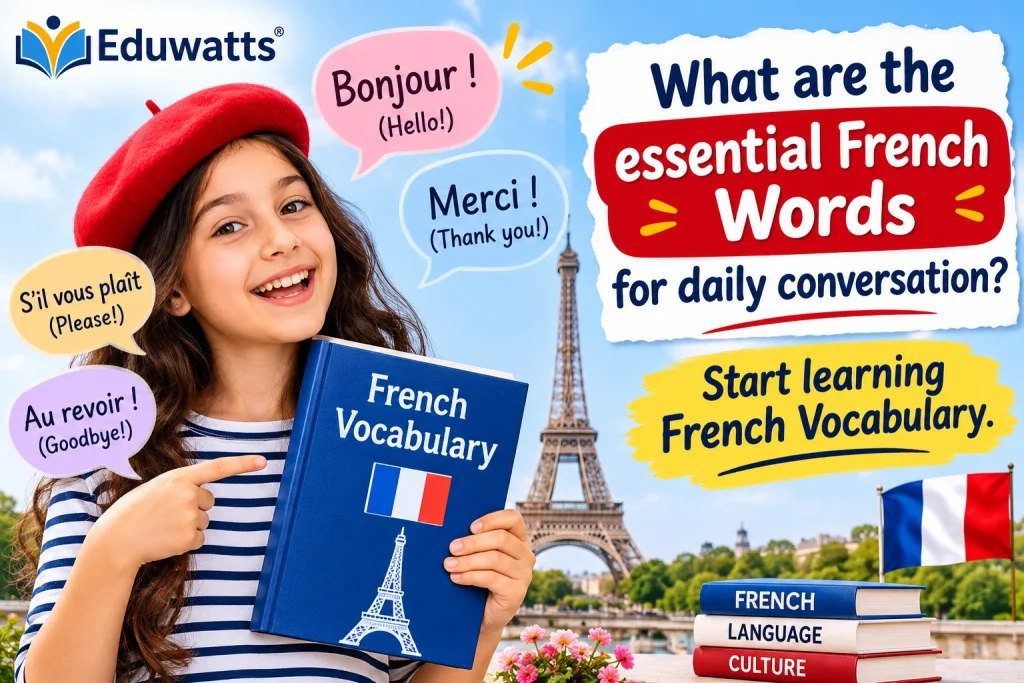
What Are the Most Common French Words Beginners Should Learn First?
In order to begin learning French, it is best to first learn the most commonly used French words, which are essential for everyday communication. By learning common words such as greetings, polite expressions, common nouns, and basic responses, you will be able to engage in simple conversations without having to memorise complex sentences.
Learn French Vocabulary
| French Word | English Meaning | Simple French Sentence | English Translation |
| Bonjour | Hello / Good morning | Bonjour, comment allez-vous ? | Hello, how are you? |
| Merci | Thank you | Merci pour votre aide. | Thank you for your help. |
| Oui | Yes | Oui, je comprends. | Yes, I understand. |
| Non | No | Non, je ne sais pas. | No, I don’t know. |
| S’il vous plaît | Please | Un café, s’il vous plaît. | A coffee, please. |
| Pardon | Excuse me / Sorry | Pardon, où est la gare ? | Excuse me, where is the station? |
| Ami | Friend | Mon ami habite à Paris. | My friend lives in Paris. |
| Maison | House | Ma maison est grande. | My house is big. |
| Eau | Water | Je bois de l’eau. | I drink water. |
| Livre | Book | Je lis un livre. | I am reading a book. |
Learning tip: Practice these words in brief sentences rather than studying individual translations. This will assist you in understanding how French words function collectively in everyday speech.
What Are the Basic French Words with English Meanings?
Learning French can be made much simpler if the vocabulary is grouped into common categories. Rather than learning individual words, concentrate on those which you will probably have to utilise in your everyday life (such as at home), when travelling, in conversation, or as part of your job.
The following sections include essential French words with English definitions, close-to-correct pronunciations and illustrative sentences.
1. French Greetings and Polite Expressions
Greetings and polite expressions are some of the very first words that beginners should begin learning. These types of phrases will allow you to initiate a conversation, express respect toward others, and speak naturally in both formal and informal settings.
| French Word | English Meaning | Pronunciation | Example Sentence |
| Bonjour | Hello / Good morning | bohn-zhoor | Bonjour, Madame. |
| Bonsoir | Good evening | bohn-swahr | Bonsoir, Monsieur. |
| Salut | Hi / Bye | sah-loo | Salut, mon ami ! |
| Merci | Thank you | mehr-see | Merci beaucoup. |
| S’il vous plaît | Please | seel voo pleh | Aidez-moi, s’il vous plaît. |
| Excusez-moi | Excuse me | ex-kew-zay mwah | Excusez-moi, où est la banque ? |
| Au revoir | Goodbye | oh ruh-vwahr | Au revoir et à bientôt ! |
| À bientôt | See you soon | ah byan-toh | À bientôt, Marie ! |
2. French Numbers and Counting Words
Numbers can be used for things like buying groceries, talking about how much items cost, exchanging contact info, knowing the time of day, and booking reservations. Start with small numbers, then work your way up to larger ones.
| French Word | English Meaning | Pronunciation | Example Sentence |
| Un | One | uhn | J’ai un frère. |
| Deux | Two | duh | J’ai deux livres. |
| Trois | Three | trwa | Elle a trois stylos. |
| Quatre | Four | katr | Il y a quatre chaises. |
| Cinq | Five | sank | J’ai cinq euros. |
| Six | Six | sees | Nous avons six pommes. |
| Sept | Seven | set | Il est sept heures. |
| Dix | Ten | dees | J’ai dix minutes. |
3. French Numbers and Counting Words
Numbers are very important for things like shopping, talking about money, exchanging contact info, telling what time it is, and booking reservations. Start by learning small numbers first and then move on to bigger numbers.
| French Word | English Meaning | Pronunciation | Example Sentence |
| Famille | Family | fah-mee | Ma famille est gentille. |
| Père | Father | pehr | Mon père travaille à Paris. |
| Mère | Mother | mehr | Ma mère aime lire. |
| Frère | Brother | frehr | Mon frère est étudiant. |
| Sœur | Sister | suhr | Ma sœur parle français. |
| Ami | Friend (male) | ah-mee | Mon ami est sympathique. |
| Amie | Friend (female) | ah-mee | Mon amie habite à Lyon. |
| Enfant | Child | ahn-fahn | L’enfant joue dans le jardin. |
4. French Words for Family and Relationships
The words we use to describe our families can help us introduce our family members to others, explain how we are related to them, and provide insight into our own lives.
| French Word | English Meaning | Pronunciation | Example Sentence |
| Famille | Family | fah-mee | Ma famille est gentille. |
| Père | Father | pehr | Mon père travaille à Paris. |
| Mère | Mother | mehr | Ma mère aime lire. |
| Frère | Brother | frehr | Mon frère est étudiant. |
| Sœur | Sister | suhr | Ma sœur parle français. |
| Ami | Friend (male) | ah-mee | Mon ami est sympathique. |
| Amie | Friend (female) | ah-mee | Mon amie habite à Lyon. |
| Enfant | Child | ahn-fahn | L’enfant joue dans le jardin. |
5. French Food and Beverage Vocabulary
Food vocabulary is especially helpful while dining out, ordering food at a restaurant, buying groceries from a store, and speaking about what you enjoy eating.
| French Word | English Meaning | Pronunciation | Example Sentence |
| Pain | Bread | pan | Je mange du pain. |
| Eau | Water | oh | Je voudrais de l’eau. |
| Lait | Milk | leh | Je bois du lait. |
| Café | Coffee | kah-fay | Je prends un café. |
| Thé | Tea | tay | Elle aime le thé. |
| Pomme | Apple | pom | Je mange une pomme. |
| Fromage | Cheese | froh-mahzh | J’aime le fromage. |
| Riz | Rice | ree | Nous mangeons du riz. |
6. French Colours and Common Objects
The colours and ordinary things around us assist beginners in describing what is in their environment, identifying those things, and stating basic preferences.
| French Word | English Meaning | Pronunciation | Example Sentence |
| Rouge | Red | roozh | La voiture est rouge. |
| Bleu | Blue | bluh | Mon sac est bleu. |
| Vert | Green | vehr | L’arbre est vert. |
| Jaune | Yellow | zhohn | Le soleil est jaune. |
| Livre | Book | leevr | Voici mon livre. |
| Table | Table | tahbl | La table est grande. |
| Chaise | Chair | shehz | La chaise est confortable. |
| Téléphone | Telephone | tay-lay-fohn | Mon téléphone est neuf. |
7. French Days, Months, and Time
By knowing what day it is, how long a month is, and other terms that relate to time, you can talk about when things will happen, set up meetings, decide on what you want to do, and understand daily conversations.
| French Word | English Meaning | Pronunciation | Example Sentence |
| Lundi | Monday | luhn-dee | Je travaille lundi. |
| Mardi | Tuesday | mahr-dee | Le cours commence mardi. |
| Mercredi | Wednesday | mehr-kruh-dee | Nous étudions mercredi. |
| Vendredi | Friday | vahn-druh-dee | Je voyage vendredi. |
| Janvier | January | zhahn-vee-ay | Mon anniversaire est en janvier. |
| Mars | March | mahrs | Le printemps commence en mars. |
| Aujourd’hui | Today | oh-zhoor-dwee | Aujourd’hui, il fait beau. |
| Demain | Tomorrow | duh-man | Je pars demain. |
8. French Places and Directions
These words will come in handy when you need help with getting directions, moving about French-speaking cities, locating public transportation, and/or finding significant locations.
| French Word | English Meaning | Pronunciation | Example Sentence |
| Gare | Railway station | gahr | Où est la gare ? |
| Aéroport | Airport | ah-ay-roh-por | L’aéroport est loin. |
| Hôtel | Hotel | oh-tel | L’hôtel est confortable. |
| École | School | ay-kohl | Mon école est près d’ici. |
| Banque | Bank | bahnk | La banque est ouverte. |
| À gauche | To the left | ah gosh | Tournez à gauche. |
| À droite | To the right | ah drwaht | La pharmacie est à droite. |
| Tout droit | Straight ahead | too drwah | Allez tout droit. |
Pronunciation note: The above pronunciation guide is an approximation of the sound of the word as it relates to English-speaking learners, but it is not a formal International Phonetic Alphabet (IPA) representation of the sound. By listening to native French speakers, you will gain a better understanding of the actual sounds produced in French.
What French Words and Phrases Are Used in Everyday Conversations?
In everyday French conversation, there is much more than just the use of isolated vocabulary words. You need to be able to make use of appropriate expressions to introduce yourself, ask questions about what you do each day, explain how you go about doing things, state your opinion on something, and ask for help when needed.
Learn French Vocabulary for Daily Conversations
| French Word or Phrase | English Meaning | When to Use It |
| Je m’appelle… | My name is… | Introducing yourself |
| Comment vous appelez-vous ? | What is your name? | Asking someone’s name formally |
| Comment ça va ? | How are you? | Informal conversation |
| Ça va bien. | I am fine. | Responding to a greeting |
| Où habitez-vous ? | Where do you live? | Asking about someone’s location |
| J’aime… | I like… | Expressing preferences |
| Je n’aime pas… | I don’t like… | Expressing dislikes |
| Pouvez-vous m’aider ? | Can you help me? | Asking for assistance |
| Je ne comprends pas. | I don’t understand. | Requesting clarification |
| Parlez-vous anglais ? | Do you speak English? | Communicating while travelling |
| Combien ça coûte ? | How much does it cost? | Shopping |
| Je voudrais… | I would like… | Making a polite request |
In the next table, you will find some of the most common French phrases that beginners may practice in real-world contexts.
1. Introducing Yourself in French
Introducing yourself is one of the first steps in gaining confidence in French. To start, provide your name, nationality, occupation, and where you live.
Useful Expressions
| French Expression | English Translation |
| Je m’appelle Riya. | My name is Riya. |
| Je suis indien/indienne. | I am Indian. |
| Je suis étudiant/étudiante. | I am a student. |
| J’habite à Delhi. | I live in Delhi. |
| J’apprends le français. | I am learning French. |
| Bonjour! | Hello! |
| Comment vous appelez-vous ? | What is your name? |
| Et vous ? | And you? |
| Enchanté ! / Enchantée ! | Nice to meet you! |
2. Asking Someone How They Are
There are many ways that French speakers ask how you are doing. You should use a formal or an informal expression based on your relationship with the person.
Common French Greetings
| French Expression | English Translation | Usage |
| Comment allez-vous ? | How are you? | Formal |
| Comment vas-tu ? | How are you? | Informal |
| Ça va? | How’s it going? | Casual |
| Je vais bien. | I am fine. | General |
| Très bien, merci. | Very well, thank you. | Polite |
3. Talking About Daily Routines
Daily routine vocabulary will assist in explaining what you do daily, as well as your work hours, education, and other everyday routines.
French Vocabulary for Daily Routines
| French Expression | English Translation |
| Je me réveille. | I wake up. |
| Je prends le petit-déjeuner. | I have breakfast. |
| Je vais au travail. | I go to work. |
| J’étudie le français. | I study French. |
| Je rentre à la maison. | I return home. |
4. Expressing Likes and Dislikes
I like to speak simply in French about what I enjoy doing, eating, and my favourite things to do.
| French Expression | English Translation |
| J’aime la musique. | I like music. |
| J’adore voyager. | I love travelling. |
| Je préfère le café. | I prefer coffee. |
| Je n’aime pas le sport. | I don’t like sports. |
| Je déteste attendre. | I hate waiting. |
5. Asking for Help and Making Simple Requests
The use of these phrases is especially beneficial while travelling, shopping, attending classes, and speaking to other French speakers.
Useful French Phrases for Everyday Situations
| French Expression | English Translation |
| Pouvez-vous m’aider ? | Can you help me? |
| Où sont les toilettes ? | Where is the restroom? |
| Pouvez-vous répéter ? | Can you repeat? |
| Je voudrais un café. | I would like a coffee. |
| Parlez lentement, s’il vous plaît. | Please speak slowly. |
How Do You Say Hello, Thank You, and Goodbye in French?
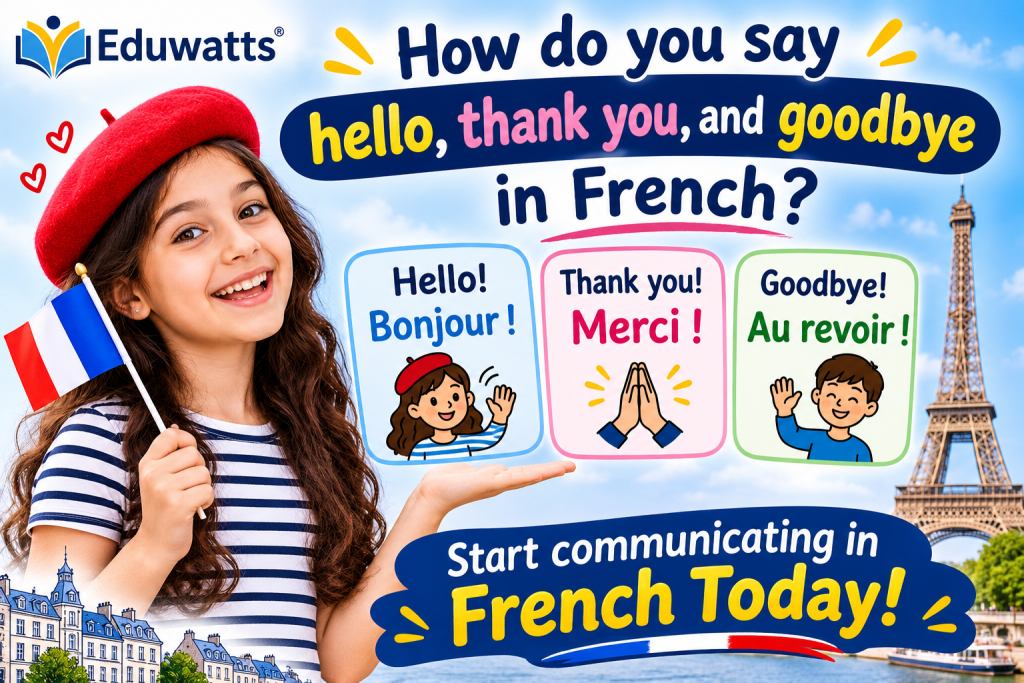
Greetings and polite language will help make a good first impression when communicating with someone in French. There are both formal and informal ways of expressing yourself in French, so it is important to choose the proper form of communication based on who you are talking to.
| English Expression | Formal French | Informal French |
| Hello | Bonjour | Salut |
| Good evening | Bonsoir | Salut |
| How are you? | Comment allez-vous ? | Comment vas-tu ? |
| Thank you | Merci | Merci |
| Please | S’il vous plaît | S’il te plaît |
| Goodbye | Au revoir | Salut / À plus |
| See you soon | À bientôt | À bientôt |
| Excuse me | Excusez-moi | Excuse-moi |
When should you use formal French?
When you are talking with a stranger, teacher, employer, customer, older person, or someone you do not know well, use formal language. The use of “vous” indicates that you respect them and want to show that you are polite.
When should you use informal French?
Informal language can be used when communicating with friends, family members, classmates, or other people that you have a close relationship with. In most of those types of relationships, the pronoun tu will be utilised. This understanding can help you to speak appropriately and avoid sounding too casual when speaking in professional or unfamiliar situations.
What Are the Most Useful French Verbs and Adjectives for Beginners?
Verbs and adjectives will assist you in creating meaningful sentences, describing people and places, explaining what is happening, and expressing your views. Those who are just beginning to learn English may wish to initially concentrate on using verbs that are commonly used and descriptive words.
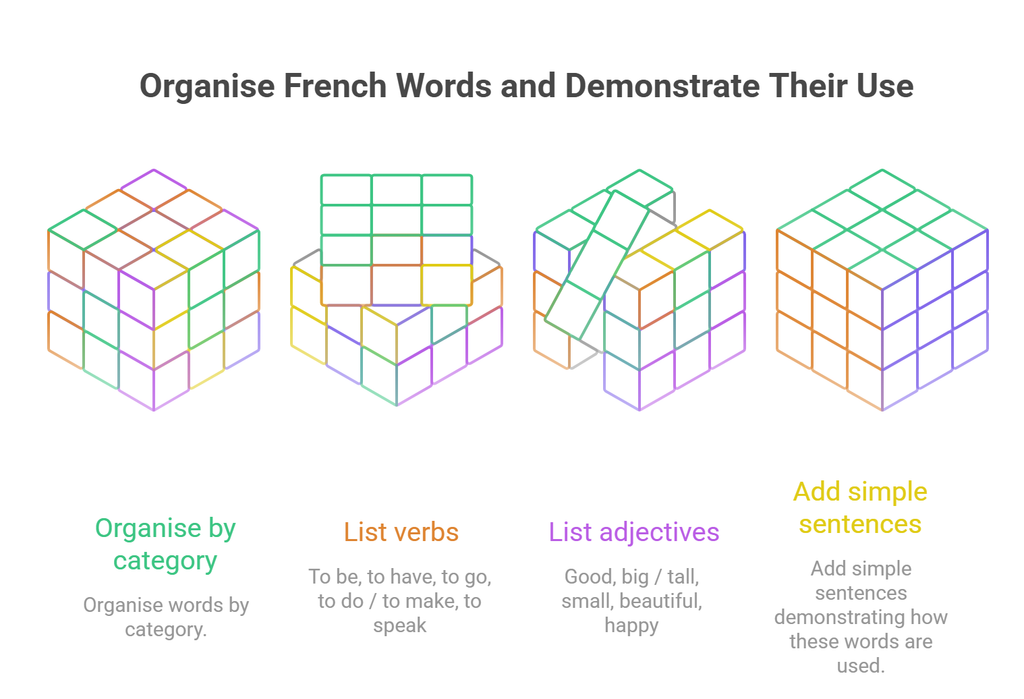
| Categories | French Words | English Meaning | Sentence |
| Essential Verbs | Être | To be | Je suis étudiant. – I am a student. |
| Essential Verbs | Avoir | To have | J’ai un livre. – I have a book. |
| Essential Verbs | Aller | To go | Je vais à l’école. – I go to school. |
| Essential Verbs | Faire | To do / Make | Je fais mes devoirs. – I do my homework. |
| Essential Verbs | Parler | To speak | Je parle français. – I speak French. |
| Essential Verbs | Manger | To eat | Nous mangeons du pain. – We eat bread. |
| Essential Verbs | Boire | To drink | Elle boit de l’eau. – She drinks water. |
| Essential Verbs | Aimer | To like / Love | J’aime la musique. – I like music. |
| Descriptive Adjectives | Grand / Grande | Big / Tall | La maison est grande. – The house is big. |
| Descriptive Adjectives | Petit / Petite | Small / Short | Le chat est petit. – The cat is small. |
| Descriptive Adjectives | Beau / Belle | Beautiful | C’est une belle ville. – It is a beautiful city. |
| Descriptive Adjectives | Bon / Bonne | Good | Le repas est bon. – The meal is good. |
| Descriptive Adjectives | Heureux / Heureuse | Happy | Elle est heureuse. – She is happy. |
| Descriptive Adjectives | Fatigué / Fatiguée | Tired | Je suis fatigué. – I am tired. |
| Descriptive Adjectives | Facile | Easy | Le français est intéressant et facile à pratiquer. – French is interesting and easy to practise. |
| Descriptive Adjectives | Difficile | Difficult | Cette question est difficile. – This question is difficult. |
Beginner’s Grammar Tip: French nouns have gender (masculine/feminine) and most adjectives will adjust their ending based on whether the noun is masculine or feminine. When learning adjectives, try to find out both the masculine and feminine forms of those adjectives.
Thinking About Learning French?
Explore top French Language Certification Courses for beginners with Eduwatts.
Eduwatts: No.1 Institute for French Language

Eduwatts is an educational institute that provides structured French courses designed to accommodate students of varying skill levels. The institution uses a multi-faceted method of teaching French, which includes both instructor-led lessons and online resources, as well as assessments and professional development assistance. Eduwatts offers numerous online courses to students who wish to learn French for either self-improvement, study abroad opportunities or to enhance their careers.
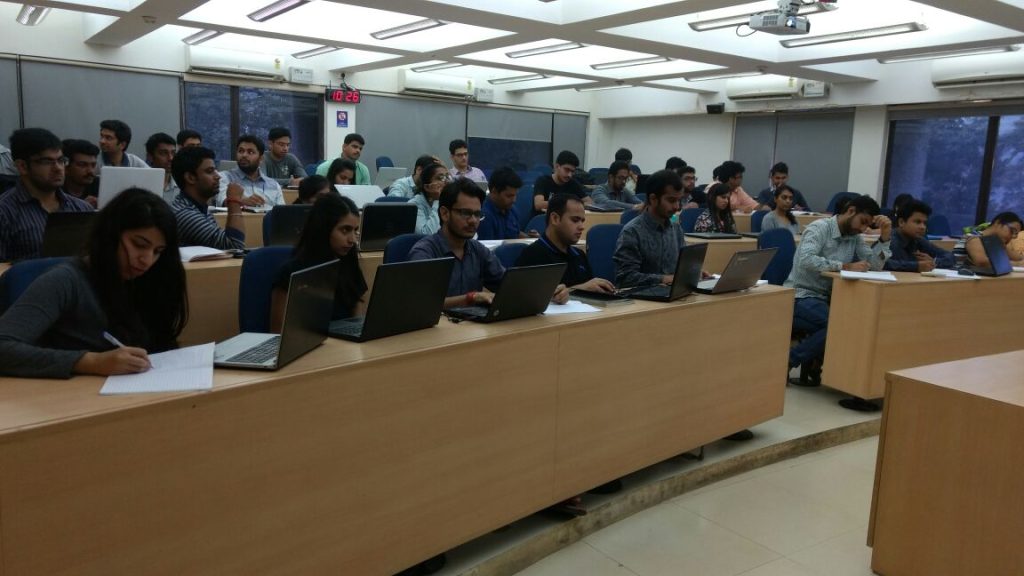
Post Graduate Diploma Professional in French Language
The Post Graduate Diploma Professional in French Language offered by Dunster Business School is a program that provides advanced students with an opportunity to improve their ability to communicate effectively in French and to enhance their knowledge of the subject. Postgraduate Diploma Professional in French Language by DBS addresses both C1 and C2 levels of performance in French, with a focus on improving students’ understanding of advanced grammar, expanding students’ vocabulary, improving students’ pronunciation, introducing students to French literature, and developing students’ professional communication abilities.
Key Highlights
- 132+ Hours of Training: Access instructor-led, interactive training sessions.
- Advanced French Curriculum: Learn C1 and C2-level reading, writing, listening, and speaking skills.
- 24/7 E-Learning Portal: Access digital learning resources and study materials.
- Expert-led learning: Learn with help from an expert who knows the language well.
- AI-Powered Assessments: Practise with automated, graded exercises.
- Vocabulary Flashcards: Help improve your vocabulary by using a structured revision and practice method.
- Internship Experience: Several internship opportunities are part of the program.
- Premium Job Portal: Access the programme’s exclusive job portal.
- Certification: Certification and Swiss credits are listed on the program as part of the Dunster Business School in Switzerland, depending on whether the student meets the school’s criteria for both certification and credit.
Dunster Business School Switzerland will issue the degree/certificate. Eduwatts is an admissions partner. An assessment process must be completed before receiving a degree/certificate.
Learning Benefits
- Improve Language Proficiency: The program will assist learners in achieving a higher level of proficiency in French and enhance their academic and professional communication skills.
- Enhance Your Ability to Use Language: Improve your skill to communicate effectively through speech, hearing, reading, and writing.
- Expand your knowledge of words: Use more advanced language and learn words that are specific to your field or profession, as well as words that are appropriate for various types of social interactions.
- Improve Grammar: Learn how to comprehend complex grammar rules and apply them to your writing.
- Develop Cultural Understanding: Learn about French culture through its literature, history, media, and other forms of expression.
- Prepare for Language Examinations: Develop relevant skills for advanced French language exams such as DELF and DALF based on exam requirements and eligibility.
Career Benefits
Advanced French proficiency allows people to access many different career options within international organisations, education, translation services, and the global business sector.
- International Opportunity: Enhance your knowledge of the French language for companies that do business with French-speaking countries.
- Build your translation skills: Prepare to work as a professional translator/localizer through advanced education and on-the-job experience.
- Enhance Opportunities for Employment as a French Teacher: Acquire the language skills required to apply for French teaching positions, depending on meeting all educational requirements.
- Improve Professional Communication: Learn to communicate better with French-speaking clients, colleagues, and business partners.
- Seek Educational Options: Develop the ability to use French as a tool to pursue additional learning and/or research within French-speaking settings.
Ready to Start Learning French?
Before your enrollment in a top French Language Course with Eduwatts, review the curriculum of the program, its eligibility criteria, assessment methods used within it and the most current admission requirements.
Top Job Roles After Learning French Vocabulary
Learning French may lead to many different job opportunities. However, knowing a lot of words will not provide you with enough ability to be fluent at work. Most jobs related to languages will need you to have high-level skills, some real-world experience and possibly other education/training specific to the area of expertise required.
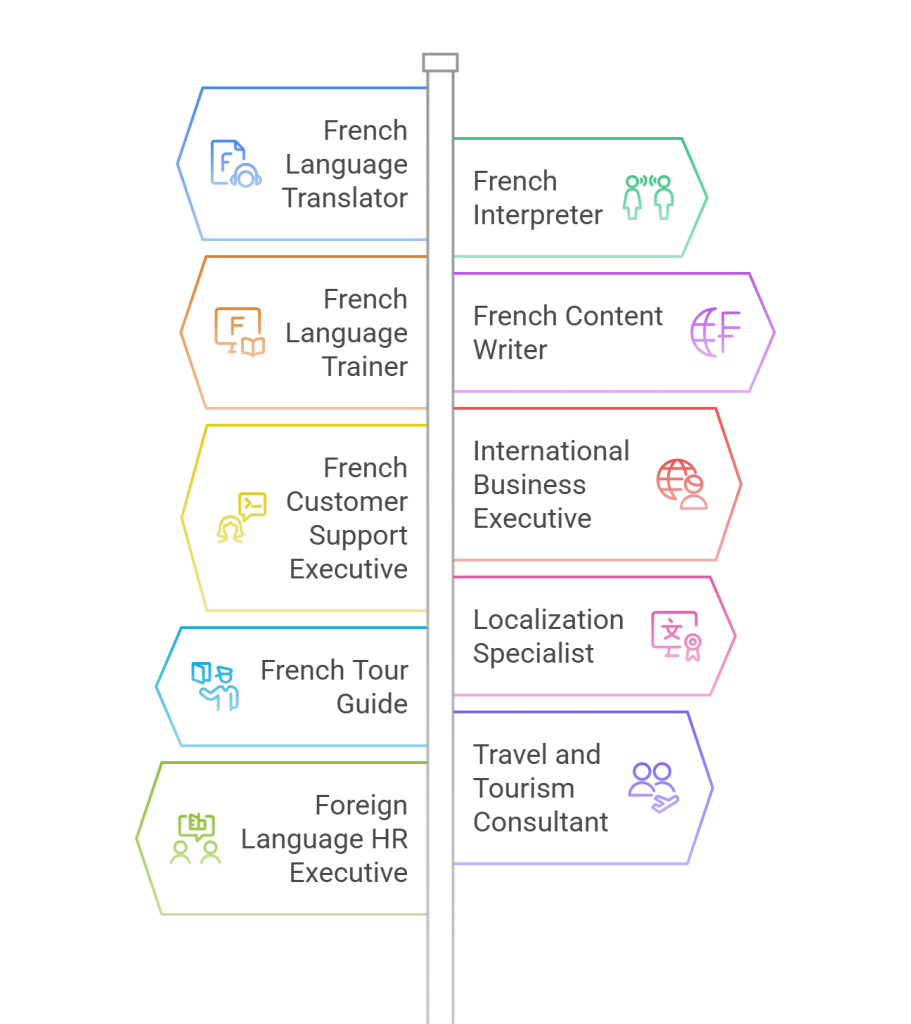
| Job Roles | Skills Required | Responsibilities | Salary in India (Approx.) |
| French Translator | Advanced French, writing, editing, subject knowledge | Translate documents, reports, websites, and business content | ₹3–8 LPA |
| French Interpreter | Listening, speaking, consecutive or simultaneous interpreting | Facilitate communication during meetings, conferences, and discussions | ₹3–9 LPA |
| French Language Trainer | Advanced French, teaching methods, communication skills | Teach grammar, vocabulary, pronunciation, and conversation | ₹2.5–6 LPA |
| French-Speaking Customer Support Executive | Spoken French, problem-solving, customer service | Handle customer enquiries and resolve service-related issues | ₹3–7 LPA |
| International Business Development Executive | Business communication, French proficiency, negotiation | Build client relationships and support business expansion | ₹4–10 LPA |
Career tip: To pursue a career as a French translator, interpreter, or language trainer, you must move beyond the beginning stage of learning French. You need to achieve a high level of proficiency in French and gain hands-on experience in the area of specialisation that you plan to pursue.
In my work on French Vocabulary, I found that memorising single words was less effective than learning to use French words in daily conversation. Organising your vocabulary by category makes your learning process more organised and simpler to use. In addition, I have tested and experienced that daily practising French words, forming sentences, and engaging in French conversations will build confidence to speak in French. I have found that Eduwatts’ structured methodology for learning French includes instruction from experts; access to digital educational tools; flashcards for building vocabulary; and real-world applications. By utilising all of the components of learning French through the combination of vocabulary building with speaking, listening, reading, and writing practice, beginners can communicate effectively in French.
Conclusion
Learning French vocabulary will allow you to confidently speak in daily life, while travelling, during your studies, or in professional settings. You should begin by learning common French words, then practice using these words in common expressions, and finally work on improving your ability to read, write, listen, and speak in French. Consistency is key when it comes to developing any language skill.
Talk to a French Expert
Contact us to explore French Language courses from A1 to C2. Eduwatts offers a variety of structured French language classes delivered by professional French language experts. Gain confidence to communicate in French as you continue to develop your knowledge of French!
Recommended Reads
- Top 101+ Basic French Words for Beginners to Learn First
- French Translator Jobs in 2027: Salary, Skills & Career Guide
- 80+ Common French Slang Words Every Learner Should Know
- How to Learn French Language Fast: A Step-by-Step Guide
- French Numbers 1–100: Easy Counting with Pronunciation & Examples
FAQs
Ans. The most effective method for learning French is to study five to ten common French words per day, practice using those words in sentences, create and review flashcards with the words on them, listen to people who speak French as their first language and review what you have learned each week to improve your ability to remember.
Ans. Beginning learners may want to focus on learning five to ten new French words per day. When doing this, try to understand the word’s meaning, how it is pronounced, and how it can be used in a sentence. Try to avoid simply memorising long lists of words without any context.
Ans. You can start to learn French vocabulary before you study the grammar. But as you continue to build on your knowledge of the language’s grammar, you will be able to make sentences, conjugate the verbs in those sentences, and communicate with greater accuracy.
Ans. For the A1 exam, you should learn how to greet people; how to introduce yourself and others; how to count; the names of your family members; the jobs that people do; the types of food that are available; how to go shopping; your favourite things to do (hobbies); how to tell someone where they need to go (directions); what you typically do every day (daily routine); and some of the most common ways of speaking when you are having a short conversation with someone.
Ans. With consistent practice every day, a beginner will develop a basic French vocabulary in about 2-3 months. The rate of development of that vocabulary will depend upon the amount of time spent practising, revising, listening to and speaking French.
Ready to Start Your Learning Journey?
Join thousands of learners and build your future with expert-led courses and 100% practical training.

Pallavi Saxena
With more than 15 years of experience, I dedicatedly writing informative content for my audience. With extensive experience in content writing and digital publishing, I specialize in creating informative, engaging, and industry-focused content that helps readers make informed career and business decisions. My expertise includes developing high-quality content on foreign language learning, global career opportunities, ERP solutions and enterprise technologies. By staying updated with emerging trends, technological advancements, and industry best practices, I craft content that educates, inspires, and delivers lasting value to readers across diverse sectors.
View all articles